Collection Agency Bond Guide
Most states require collection agencies to obtain a surety bond before they can receive their business license. Learn how collection agency bonds work and where to get one in this guide.
Bond Overview
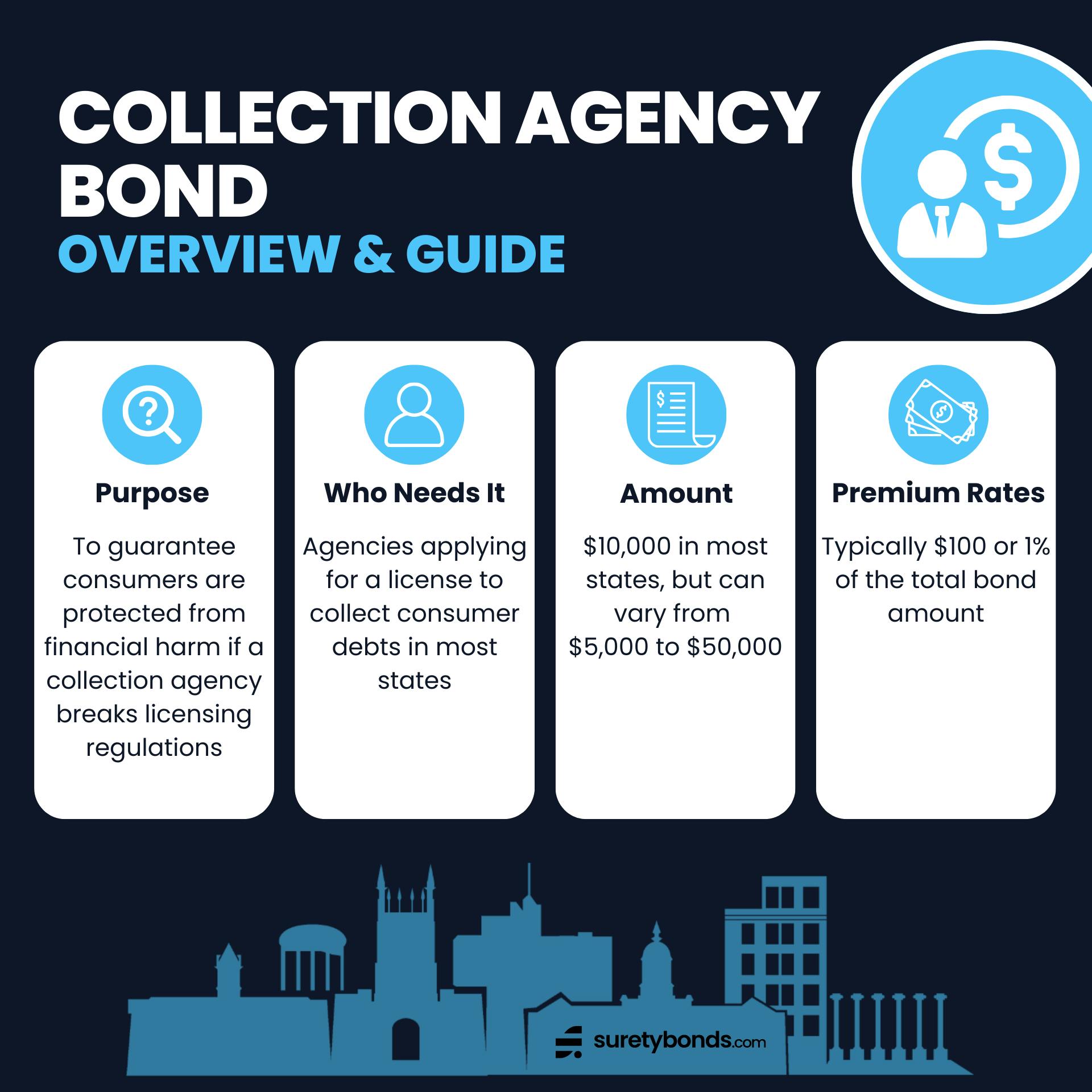
- Purpose: To guarantee consumers are protected from financial harm if a collection agency breaks licensing regulations
- Who Needs It: Agencies applying for a license to collect consumer debts in most states
- Required Amounts: $10,000 in most states, but can vary from $5,000 to $50,000
- Premium Rates: Typically $100 or 1% of the total bond amount
What Is a Bonded Collection Agency?
Collection agencies collect debts and regularly manage sensitive data, such as a consumer’s personal information and financial details. Because of this, a collection agency is regarded as a high-risk company and needs to be bonded.
What Is a Collection Agency Bond?
A collection agency bond ensures the credibility and dependability of an agency. The surety bond creates a legal contract that ensures collection agencies properly handle money from outstanding debts and ensure the funds are routed to the right company.
Why Buy Your Bond From SuretyBonds.com?
SuretyBonds.com is the nation’s top surety provider. We offer the best service, fastest delivery and most affordable collection agency bonds in the industry.
How Much Does a Collection Agency Bond Cost?
Bond amounts and regulations for collection agency licenses are established at the state level. In 85% of states, collection agencies pay a $100 premium for the required $10,000 bond coverage. If your state requires a different bond amount, your premium will vary depending on the exact value.
For example, collection agencies in New Jersey must buy a $5,000 surety bond for $100 while Florida collection agencies need $50,000 in coverage, starting at $300.
Select your state below for information specific to your area:
How Do Collection Agency Surety Bonds Work?
All surety bonds are legally binding contracts involving three parties:
- Obligee: The state department that requires the bond
- Principal: The collection agency that purchases the bond
- Surety: The provider that issues the bond and backs the principal
If a collection agency misappropriates funds, the obligee can seek reimbursement by filing a claim. The surety must pay reparation for valid claims up to the full bond amount. Then, the surety will seek reimbursement from the collection agency.
How to Obtain a Collection Agency Bond
Apply online or call 1 (800) 308-4358. The specialists at SuretyBonds.com will find you the most affordable rate available — no matter your credit score.
Once you pay your premium, we’ll issue and mail your bond immediately. If you need bond by the next day, simply choose our overnight shipping option.
How Do I File My Bond?
You'll receive your official bond form in one of three ways:
- NMLS upload
For physical and digital bonds, file the form according to your obligee's requirements. If we're able to upload your bond directly to NMLS, you’ll need to grant authority to your issuing surety provider. When you log in to your NMLS account, enter the surety’s name or surety identifier (NAIC/NPN), which will be in your email records.