A Guide to Contractor License Bonds
This page is a guide to contractor license bonds for construction professionals. For information on surety bonds for construction projects, such as payment and performance bonds, view our contract bond guide.
Bond Overview
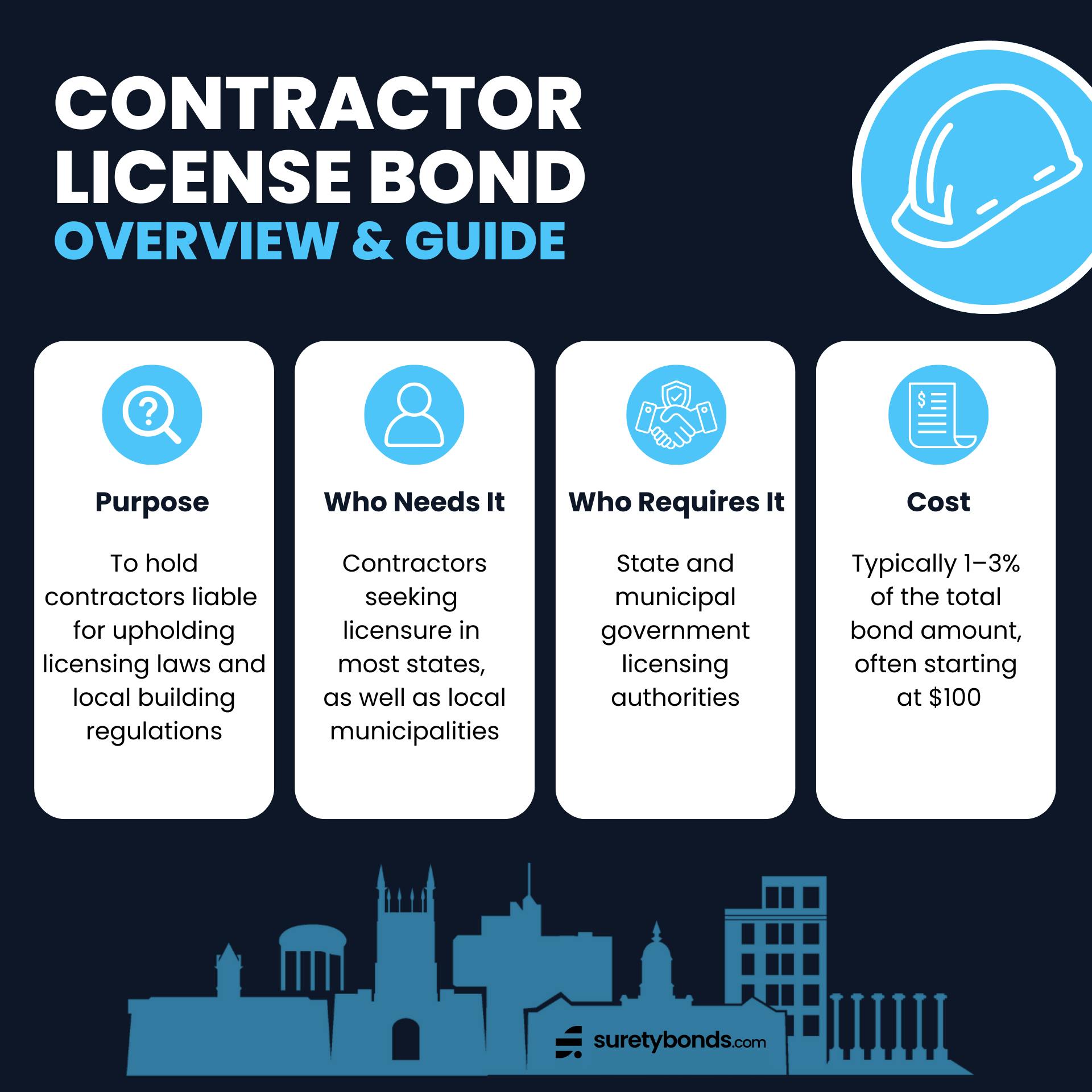
- Purpose: To hold contractors financially liable for upholding licensing laws, building standards and local regulations
- Who Needs It: Contractors seeking licensure in most states as well as local municipalities
- Regulating Body: State and municipal government licensing authorities
- Premium Rates: Typically 1–5% of the total bond amount, often starting at $100
Contractor bond amounts and prices vary widely based on location and license type. Apply today to determine your exact bond coverage requirement and receive a free quote.
What Is a Contractor License Bond?
Contractor license bonds are legally enforceable contracts binding three separate parties:
- The construction professional buying the bond is the principal.
- The public entity requiring the contractor to be bonded is the obligee.
- The company issuing the bond and guaranteeing the contractor's obligation is the surety.
If a contractor fails to fulfill the bond's terms, the obligee can file a claim on the bond to compensate for any damages. However, the surety will not absorb the loss. The contractor is expected to reimburse the surety for any money it pays when settling a bond claim.
How to Get Your Contractor License Bond Quickly & Easily
SuretyBonds.com offers the fastest and easiest contractor bonding process:
- Step 1: Apply for your bond online and receive your price quote within 24 hours.
- Step 2: Pay your invoice online 24/7 or over the phone.
- Step 3: We’ll issue your bond as soon as we process your payment.
- Step 4: Receive an instant digital copy of your bond form.
Some contractor license bonds can even be purchased and delivered electronically same-day if purchased online using our secure bond checkout.
Contractor Bonds by State
Contractor license bonds are required at the state, county or local level to become a licensed and bonded contractor. Due to this, costs and requirements vary depending on where construction will take place.
Select your state below for more specific information about contractor bonds in your area.
What Does a Contractor License Bond Cover?
Although issued by an insurance company, surety bonds differ from traditional insurance policies. A frequent misunderstanding of contractor license bonds is the belief that they protect the contractor from liability for damages.
Instead, this surety bond protects the general public. By purchasing contractor license bonds, construction professionals agree to work according to certain regulations. This protects government agencies and consumers from potential financial loss.
How Much Does a Contractor License Bond Cost?
Many contractor bonds are subject to review by an underwriter who will approve the bond based on the applicant’s qualifications, such as credit score and work history.
Many contractor bond applicants get approval for a price of 1.5–3% of the bond amount. An applicant with exceptional credit may pay as little as 1% of the bond amount, or just $100 for a $10,000 contractor bond.
Learn more about how to become a licensed, bonded contractor in our complete guide.
Approval and Financing Options for Contractors With Low Credit
SuretyBonds.com works with the top insurance providers in the nation. Regardless of your credit, we’ll shop around until we find approval and secure the lowest available rate for your contractor bond. We even offer premium financing to reduce the upfront cost.