Hunting & Fishing License Bond Guide
Hunting and fishing license bonds are required in several states to receive an operating license or permit. Learn how to navigate the bonding process with this comprehensive guide.
Bond Overview
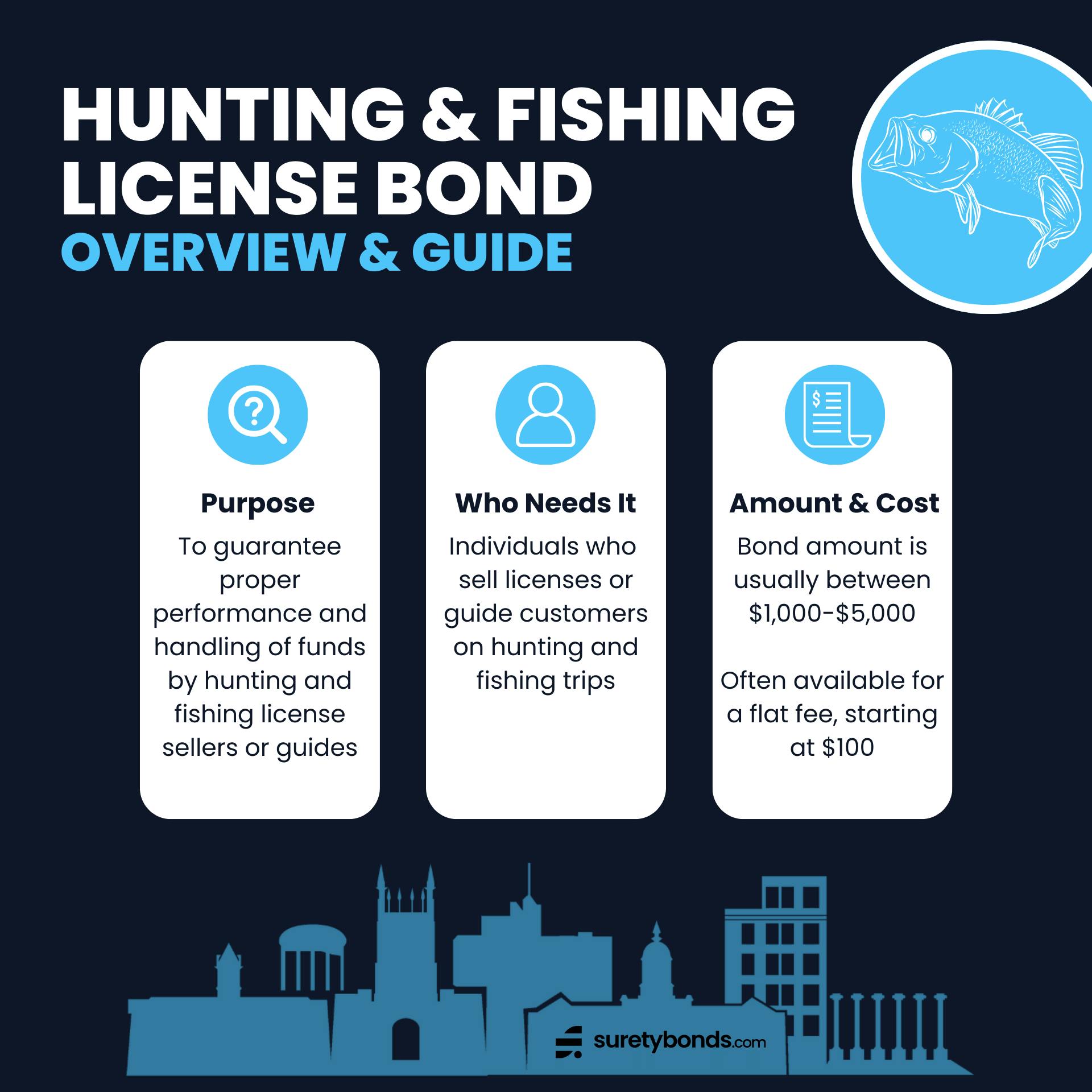
- Purpose: To guarantee proper performance and handling of funds by hunting and fishing license sellers or guides
- Who Needs It: Individuals who sell licenses or guide customers on hunting and fishing trips
- Required Amount: Typically $1,000–$15,000
- Premium Rates: Start at $100, often available for a flat fee
What Is a Hunting and Fishing License Bond?
A hunting and fishing license bond is required by individuals who sell licenses or guide customers on hunting and fishing trips. Obtaining this surety bond is a legal requirement before you can sell licenses in certain areas.
How Does a Hunting and Fishing License Bond Work?
Every surety bond binds three parties together to guarantee certain obligations. For hunting/fishing license bonds, the three parties are the following:
- Principal: The hunting/fishing license business owner purchasing the bond
- Obligee: The government agency requiring the bond
- Surety: The insurance company issuing the bond and backing the principal
The surety bond serves as a pledge by the business owner that they will sell licenses according to the law. If a hunting and fishing license vendor fails to uphold the contract terms, the bond protects the obligee and consumers from financial loss.
How Much Do Hunting & Fishing License Bonds Cost?
The cost of a fishing or hunting license bond is usually a set price but varies by state. For example, the Florida Wildlife Commission requires individuals who sell hunting and fishing licenses to file a $1,000 surety bond starting at $100. Meanwhile, the New Hampshire Fishing and Game Department requires a $10,000 bond which costs $150.
Select your state for more details on bonds in your area:
Get Your Hunting and Fishing License Bond Online
Hunting and fishing license bonds do not require underwriting, which means we can deliver your bond in as little as 24 hours. Follow these quick steps to get bonded:
- Apply online with SuretyBonds.com.
- Pay for your bond.
- Select your delivery and shipping methods.
- File the bond with your state licensing agency.
Get started today to join thousands of satisfied customers nationwide!