Insurance Broker Bond Guide
Insurance brokers in most states need a surety bond as part of the licensing process. Learn how they work and get a free quote with this guide.
Bond Overview
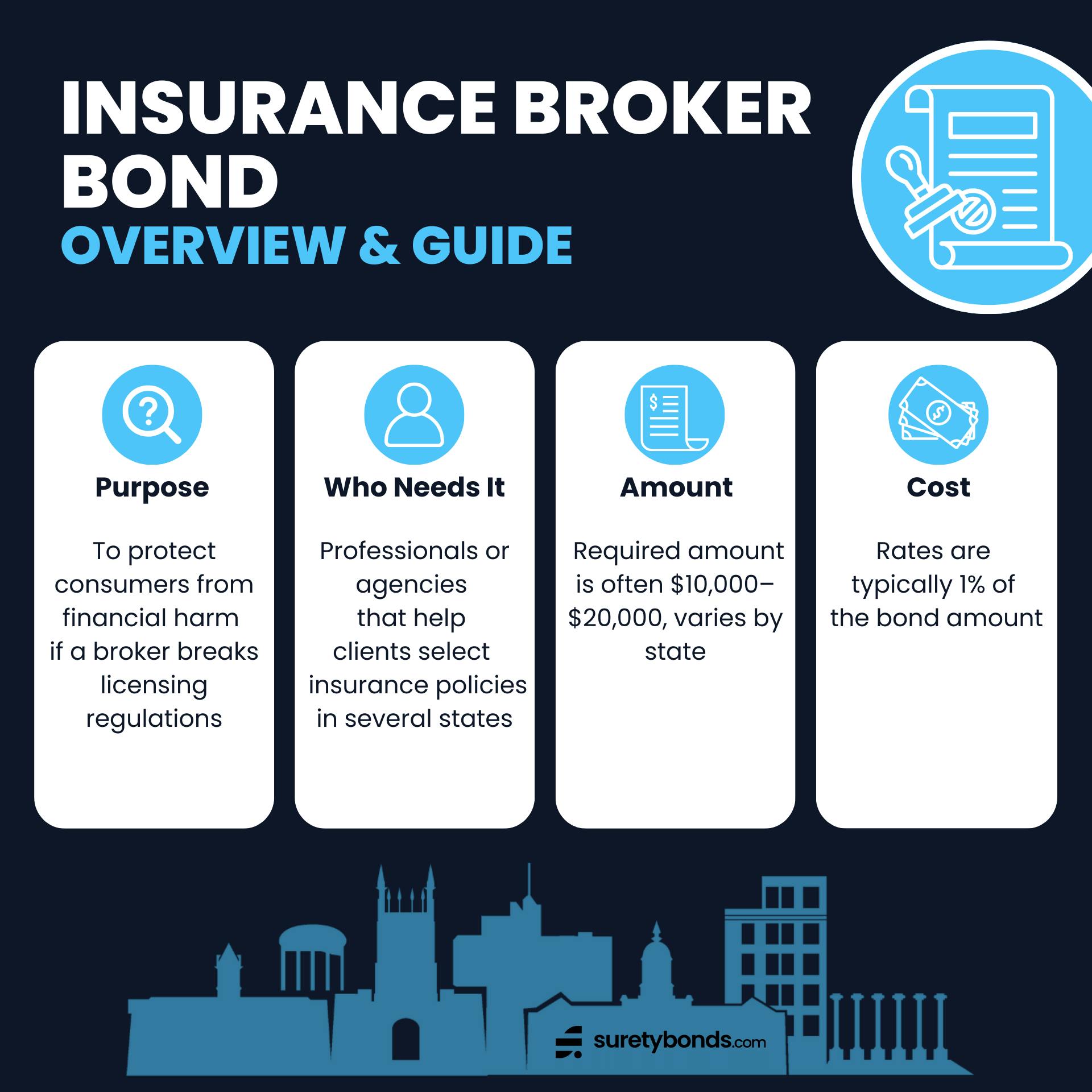
- Purpose: To guarantee consumers are protected from financial harm if an insurance broker breaks licensing regulations
- Who Needs It: Professionals or agencies that help clients select and purchase insurance policies in several states
- Required Amounts: Often $10,000–$20,000, based on the state
- Premium Rates: Typically 1% of the bond coverage amount
What Is an Insurance Broker Bond?
An insurance broker surety bond guarantees that insurance professionals fulfill their duties ethically and according to city and state laws. In most cases, an insurance broker must file proof of a surety bond or another financial security before obtaining a business license. Bonding helps protect consumers who work with insurance brokers from potential wrongdoing.
SuretyBonds.com is licensed to issue insurance broker bonds nationwide. As the industry’s top surety provider, we offer the best service, fastest delivery and most affordable bond prices.
How Do Broker Bonds Work in Insurance?
The exact obligations an insurance broker is expected to fulfill under a bond’s terms vary by state. However, most states allow harmed parties to file a claim against the bond if an insurance broker commits any of the following wrongdoings:
- Using inflated or false quotes to increase profit
- Coercing consumers into purchasing inappropriate insurance products
- Encouraging customer misrepresentation on insurance applications
For any valid claims, the claimant will be reimbursed up to the full amount.
In some situations, the larger insurance company that a broker represents is guaranteed payment for its products. As with all contracts, you should fully understand the terms before purchasing and signing a bond.
How Much Does an Insurance Broker Bond Cost?
Insurance broker bond costs and requirements vary by state. Select your state below to learn more about surety bonds for insurance professionals or call 1 (800) 308-4358 to speak with a surety expert:
Pay a Low Rate for Your Insurance Broker Bond
Most states require insurance brokers to post bonds between $10,000 and $20,000. SuretyBonds.com can issue insurance broker bonds to applicants in most states for just 1% of the bond amount. For example, insurance brokers in California can get a $10,000 two-year bond for just $100.
How Fast Can I Get My Insurance Broker Surety Bond?
Because they do not require a credit check, most insurance broker bonds can be purchased online in just a few minutes. To get your bond as quickly as possible, fill out our quote request form or call to speak with a surety specialist.
Once your payment is processed, you’ll receive a digital and physical copy of your bond form. You can select overnight shipping to get your bond in the mail tomorrow.