Lottery Bond Guide
Lottery sellers often need to file a bond as part of their state's license application. Learn how to navigate the bonding process with this guide.
Bond Overview
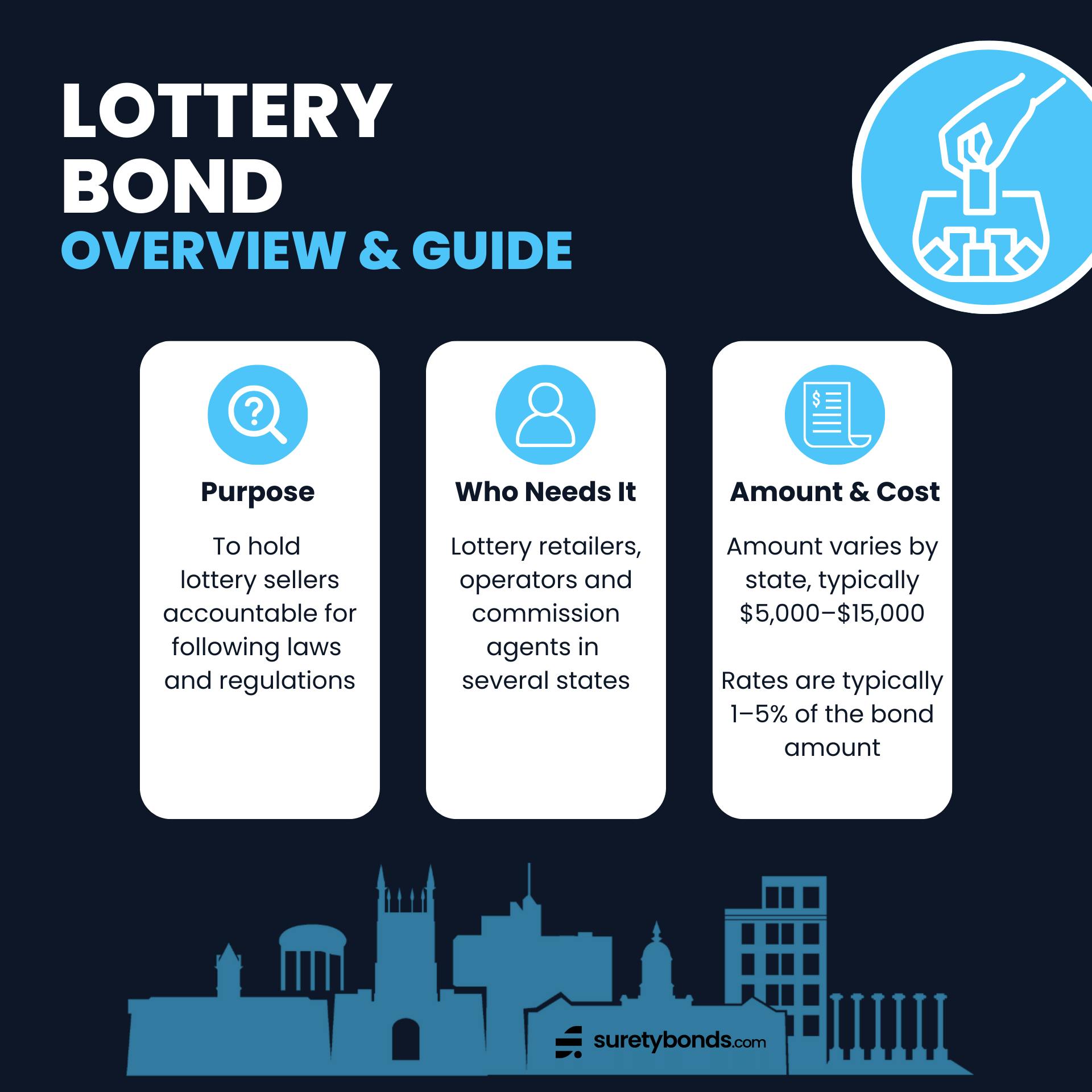
- Purpose: To hold lottery sellers accountable for following laws and regulations
- Who Needs It: Lottery retailers, operators and commission agents in several states
- Bond Amounts: Vary by state, typically $5,000–$15,000
- Premium Rates: Typically 1–5% of the bond amount
What Is a Lottery Bond?
This type of surety bond is used to protect the state if a lottery seller mishandles funds or tampers with lottery equipment. Lottery bonds also protect consumers by ensuring the seller adheres to industry regulations, ultimately keeping the lottery safe and fair for everyone.
SuretyBonds.com is the nation’s leading surety provider with the fastest and easiest bonding process. Apply online and we’ll provide your free quote within one business day.
Lottery Bond Requirements in Your State
Each state establishes its specific regulations for lottery seller licensing. Due to this, bond costs and requirements vary greatly. Select your state below for more specific information:
How Much Does a Lottery Bond Cost?
Your exact lottery bond cost will vary depending on how much coverage your state requires combined with your credit score. Most states require lottery bond amounts of $5,000–$15,000. Applicants with a credit score of 650 or higher will pay 1–5% of the bond amount, which is typically between $100 and $750.
SuretyBonds.com shops the top markets nationwide to find the lowest possible premiums for each applicant. Apply now for your free quote.
How Do Lottery Bonds Work?
A lottery bond functions as a legally binding contract that brings three parties together:
- Obligee: The government agency requiring the lottery bond
- Principal: The individual or business purchasing the bond
- Surety: The company providing the bond and backing the principal
How Are Claims Handled for Lottery Bonds?
Specific consequences vary by state, but the obligee can file a claim if the lottery seller misappropriates any lottery funds or tampers with machinery. The surety is responsible for paying reparation up to the full bond value. Then, the principal must reimburse the surety for those funds.
Can I Get a Lottery Surety Bond With Bad Credit?
Don’t let your financial situation keep you from getting the lottery bond you need. Our Bad Credit Bonding Program helps us approve 99% of applicants. Apply now to see if you qualify.