Maintenance Bond Guide
SuretyBonds.com offers the best service and fastest delivery for construction maintenance bonds in the industry. Learn how to get yours in this quick guide.
Bond Overview
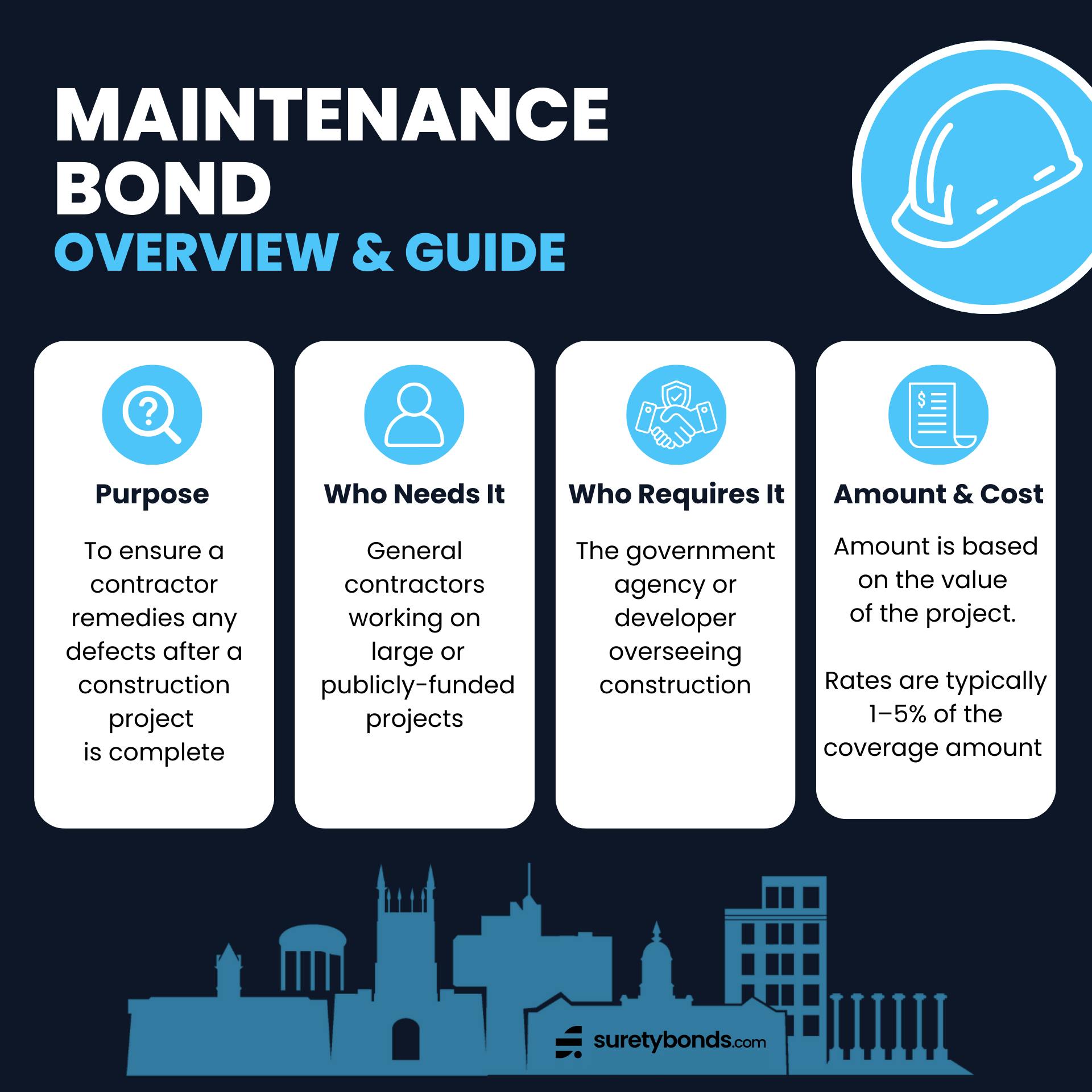
- Purpose: To make sure a contractor remedies any defects that occur in the maintenance period after a construction project is complete
- Who Needs It: General contractors working on large or publicly-funded projects
- Regulating Body: The government agency or developer overseeing construction
- Required Amount: Varies based on the value of the project at hand
- Premium Rates: Typically 1–5% of the coverage amount, based on underwriting review
Continue reading to learn how to get bonded quickly and easily.
What Is a Maintenance Bond?
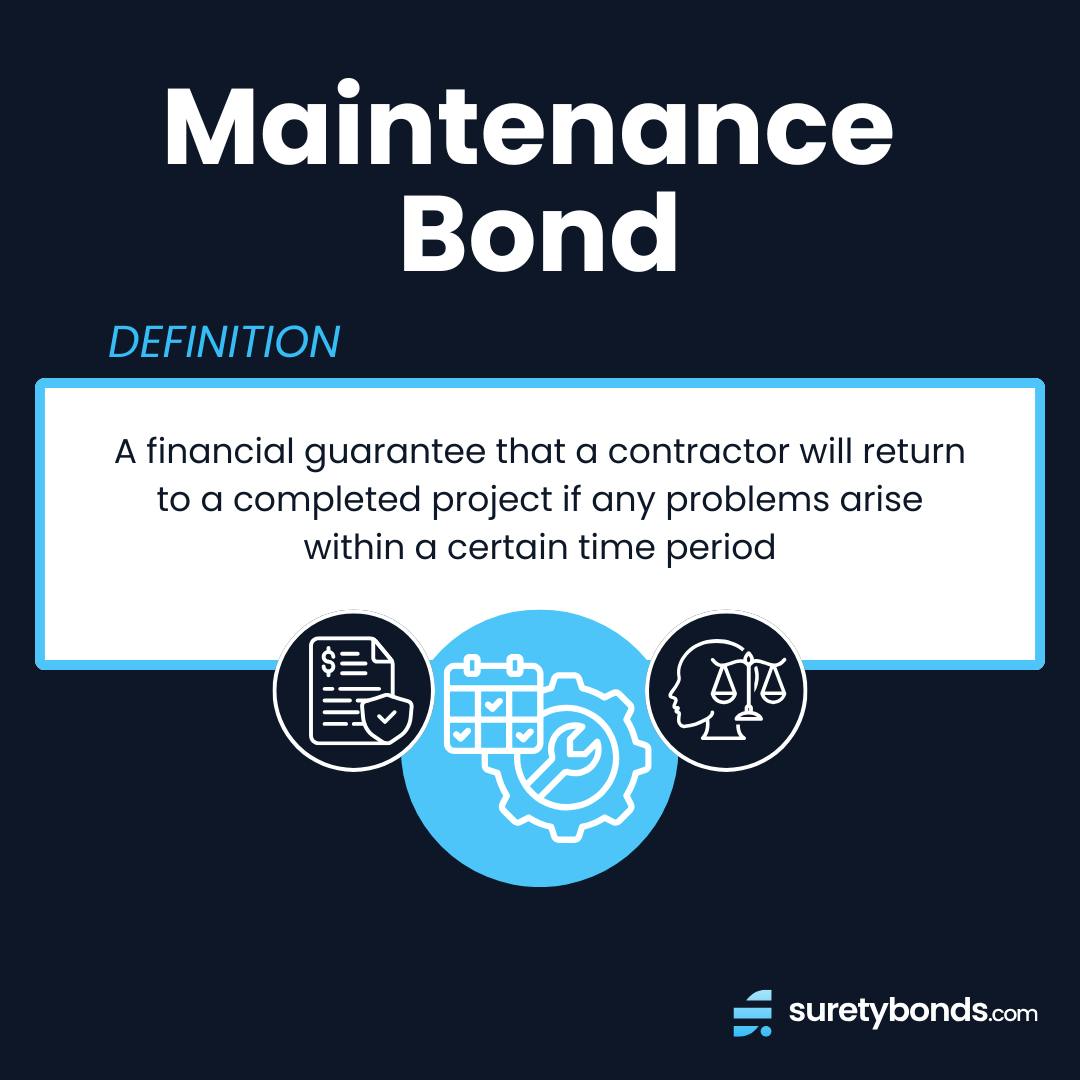
A maintenance bond is a type of contract surety bond used to resolve defaults in completed construction projects. Its main purpose is to make sure a contractor remedies any defects that occur after a project is complete.
How Do Maintenance Bonds Work?
A maintenance bond does not explicitly work as insurance. Instead, it functions as a guarantee that any mistakes made by the contractor will be compensated to the owner. These bonds are required at the discretion of construction project owners who want to protect against defects for a specific period following a project’s completion.
What Does a Maintenance Bond Cover?
Maintenance bonds can protect project owners against:
- Design defects
- Workmanship faults
- Other resulting problems
These bonds only protect against problems that emerge during the maintenance period. If a problem arises during the bond term, the owner (obligee) can file a claim. If valid, the surety will make sure the problem is resolved or provide financial compensation up to the bond amount.
How Is a Maintenance Bond Different From a Performance Bond?
A contractor will often purchase both a maintenance and a performance bond to cover contract work expectations. The performance bond ensures a contractor completes all aspects of a project, while the maintenance bond serves like a warranty for issues following project completion.
How Much Does a Construction Maintenance Bond Cost?
Your maintenance bond cost will depend on how much coverage you need combined with your application. Factors impacting your premium cost include:
- Job size and contract terms
- Bonding coverage amount
- Industry experience and work record
- Personal credit score
- Other financial credentials
The higher your credit score and the stronger your financial credentials, the lower your rate will be. Apply now to get your exact price quote.
Credit Requirements for Maintenance Bond Coverage
To qualify for our construction bonding program, applicants must have a credit score of 700+. SuretyBonds.com can offer $250,000 of single job limit bonding coverage or $500,000 of aggregate limit bonding coverage.