Medicaid Provider Bond Guide
Healthcare providers that bill Medicaid often need to file a bond as part of their state's license application. Learn how to navigate the bonding process with this guide.
Bond Overview
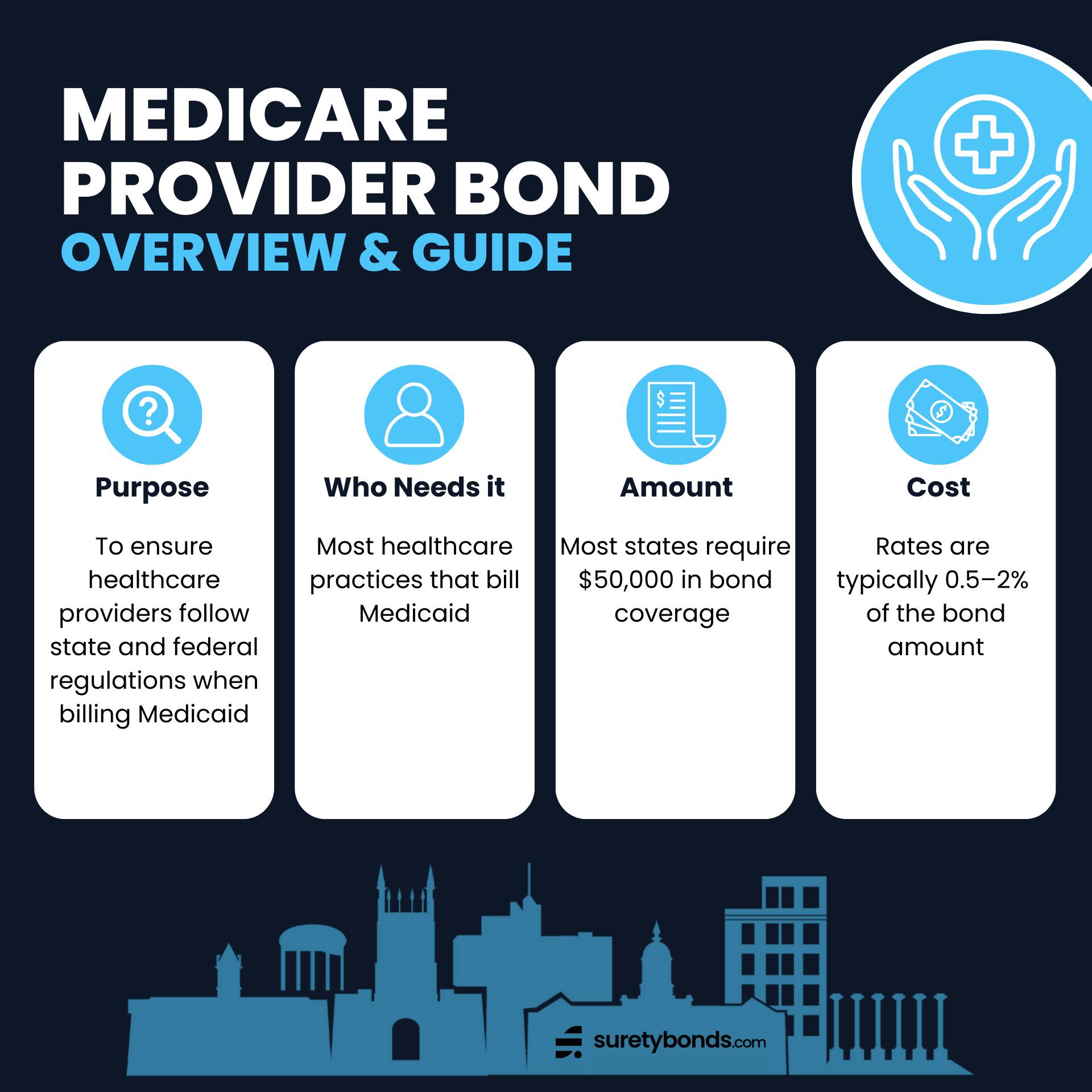
- Purpose: To ensure healthcare providers comply with state and federal regulations when billing Medicaid
- Who Needs It: Most healthcare practices that bill Medicaid
- Required Amount: Around $50,000 in most states
- Premium Rates: Typically 0.5–2% of the bond amount
What Is a Medicaid Provider Bond?
Medicaid provider surety bonds provide assurance that healthcare providers who accept Medicaid are conducting business honestly and complying with state regulations.
SuretyBonds.com is the nation’s leading surety provider with over 12,000 positive reviews. We offer the fastest and easiest bonding process for Medicaid providers with affordable prices and no hidden fees.
How to Get a Medicaid Provider Bond in Your State
Bond costs and requirements vary greatly as bond regulations are established by each state. Select your state below to apply for a Medicaid provider bond in your area:
This page is a guide to surety bonds for Medicaid providers, including home health agencies and personal care providers. If your business is a pharmacy or distributor that bills Medicaid, visit our DMEPOS Medicaid Supplier Bond Guide instead.
How Much Does a Medicaid Provider Bond Cost?
Medicaid providers who qualify for the standard market rate could pay just 0.5–2% of the total bond amount. So if you need $50,000 of coverage, you’d only pay a premium cost of $250–$1,000. Applicants with poor credit may pay a higher rate.
No matter your circumstances, SuretyBonds.com works with a nationwide network to find the lowest premiums available. Get your free quote now!
How Does Medicaid Provider Bonding Work?
To ensure healthcare providers bill Medicaid appropriately, the surety bond contract legally binds three parties:
- The obligee is the government agency that requires the bond.
- The principal is the business that buys the bond to guarantee work performance.
- The surety is the insurance underwriter that issues the bond.
If a healthcare provider breaks the bond terms, the surety covers financial damages to the obligee up to the full bond amount. However, the principal is always responsible for reimbursing the surety for any paid-out claims.
Who Needs a Medicaid Healthcare Provider Surety Bond?
Accepting Medicaid through a healthcare practice makes you likely to need a Medicaid provider bond. These services might include:
- Ambulance transportation providers
- Home health agencies
- Personal care assistance providers
- Physician groups
Home Health Agency Surety Bond Requirements
Per the Balanced Budget Act of 1997, the Secretary of the U.S. Department of Health and Human Services requires businesses that bill Medicaid to provide a home health agency Medicaid bond.
Under this bond, the principal and surety are jointly liable for uncollected Medicaid overpayments for home health services. This surety bond can reimburse an obligee for all or part of the cost of home health services furnished by a Medicaid provider.