Mortgage License Bond Guide
Most residential mortgage professionals need a surety bond as part of the licensing process. Learn how various types of mortgage bonds work and find the one you need with this complete guide.
Bond Overview
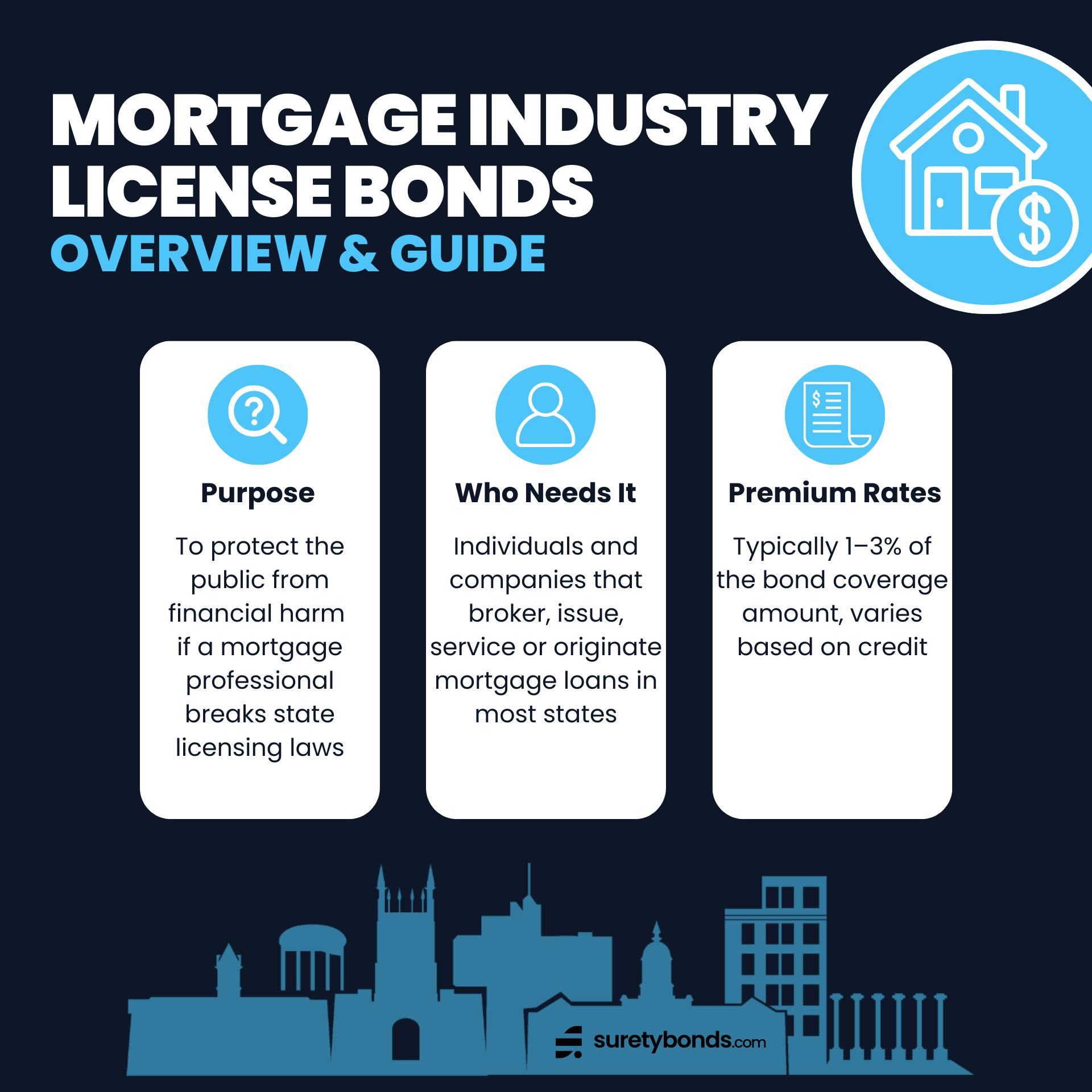
- Purpose: To protect the public from financial harm if a mortgage professional breaks state licensing laws
- Who Needs It: Individuals and companies that broker, issue, service or originate mortgage loans in most states
- Premium Rates: Typically 1–3% of the bond coverage amount, varies based on credit
Mortgage License Requirements by State
Bond requirements for licensed mortgage professionals vary across states. For example, a mortgage lender or servicer bond in California is set at $50,000 for all lenders/servicers, whereas a New York mortgage loan originator bond amount ranges from $10,000 to $100,000 based on the loan volume of the originator.
Select your state below for details on mortgage licensing and bonding in your area:
What Is a Mortgage License Bond?
Mortgage lenders, brokers, servicers and loan originators in most states are required to purchase a surety bond before they can be legally licensed. A mortgage license bond holds these professionals accountable for upholding industry regulations as defined by state licensing laws.
SuretyBonds.com is licensed to issue surety bonds for mortgage professionals in all 50 states. As the nation’s top surety provider, we offer the best service, fastest delivery and most affordable bond prices for mortgage broker bonds.
Types of Mortgage Licenses Requiring a Bond
Four common types of mortgage licenses often require the license holder to hold a surety bond:
- Mortgage Broker: Mortgage brokers bridge the gap between borrowers and lenders.
- Mortgage Lender: Mortgage lenders provide funds to a borrower for a mortgage.
- Mortgage Originator: Mortgage originators work with borrowers to complete a loan.
- Mortgage Servicer: Mortgage servicers manage loans and process loan payments.
How Much Does a Mortgage License Bond Cost?
Qualified mortgage professionals typically pay a premium of just 1-3% of their bond amount. For instance, mortgage lenders in Oregon needing a $50,000 surety bond could pay just $500 for a full year!
SuretyBonds.com also offers a Bond Premium Financing Plan for those who qualify. This helps break the upfront premium into smaller payments over time.
How to Get a Mortgage Broker Bond
Apply for your bond now and we’ll provide a free quote within one business day—guaranteed! Once your payment is processed, we’ll issue your bond. You’ll receive an instant email copy of your bond and we’ll upload the original to the NMLS website.
If your state has not yet converted to electronic surety bonds with NMLS, the original bond form will be mailed to you. You will then be responsible for filing it with the obligee.
Why Do Mortgage Professionals Need Surety Bonds?
Surety bonds protect consumers from fraud and other wrongful practices by mortgage professionals. Customers may receive financial compensation from the surety if a mortgage professional violates the terms of the bond and causes financial harm.
Examples of such harmful activities include:
- Approving a borrower for a loan costing more than they can afford
- Encouraging a homebuyer to lie on their mortgage application
Which Mortgage License Bond Do I Need?
Laws regulating mortgage professionals vary by state. Some states have bonding requirements applicable to all mortgage professionals, while others vary by profession.
To determine if you need a mortgage broker license bond, contact the government agency regulating professional licensing in your state.