Patient Trust Bond Guide
In some states, nursing facilities are required to file a surety bond to guarantee patient trust funds are managed appropriately. Learn how to navigate our quick and easy bonding process with this guide.
Bond Overview
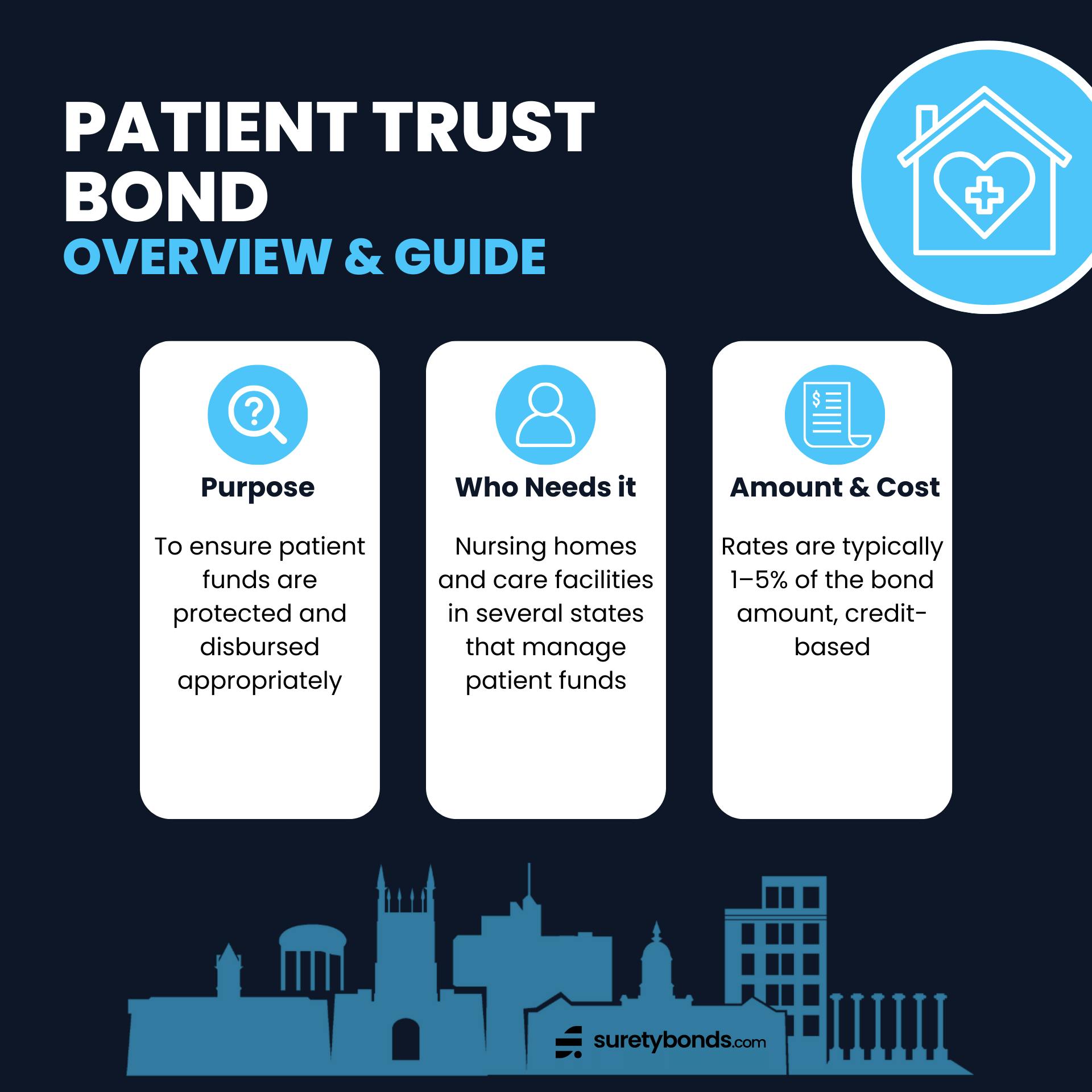
- Purpose: To ensure patient funds are protected and disbursed appropriately
- Who Needs It: Nursing homes in several states that manage patient funds
- Premium Rates: Typically 1–5% of the bond amount, credit-based
What Is a Patient Trust Bond for Nursing Homes?
Nursing homes need to take care of patients in all aspects, including financially. A patient trust bond ensures a patient’s funds will be protected and disbursed appropriately.
The bond form outlines the legal requirements for nursing facilities. A nursing home bond may require that patient funds deposited with the facility be:
- Held separately and in a trust
- Administered on behalf of patients as directed by the depositors
- Accounted for truthfully to the patients, the depositors and the obligee
SuretyBonds.com is legally licensed to issue patient trust bonds in all 50 states.
Find a Patient Trust Bond in Your State
Patient trust bond costs and amounts vary greatly by location because states establish local license requirements. Click below for more information about bonds in your area:
How Much Does a Patient Trust Fund Bond Cost?
Applicants with strong credit can expect a premium cost of just 1–5% of the bond amount, which means you could pay as little as $100 for a standard $10,000 patient trust bond.
SuretyBonds.com works with top underwriting markets nationwide to offer the best price to each applicant. Request your free quote today.
How Do Patient Trust Bonds Work for Nursing Homes?
Nursing home surety bonds are legally-binding contracts that unite three parties:
- Principal: The nursing facility purchasing the bond to guarantee proper management of patient funds.
- Obligee: The government agency requiring the bond.
- Surety: The company issuing the bond and backing the principal.
If a nursing care facility breaks the bond’s terms, harmed parties can file a claim. The surety will reimburse the patient for valid claims and then seek reimbursement from the facility.
Get Your Patient Trust Bond Today
We offer the best service, fastest delivery and most affordable prices for nursing home patient trust bonds. Apply today using these simple steps:
- Apply for your bond online and receive your price quote.
- Pay your invoice online anytime or over the phone.
- Receive a digital copy of your bond immediately or your original bond form in the mail via your preferred shipping option.
Get started now to join thousands of satisfied SuretyBonds.com customers!