Payment Bond Guide
SuretyBonds.com offers the best service and fastest delivery for construction payment bonds in the industry. Learn how to get yours in this quick guide.
Bond Overview
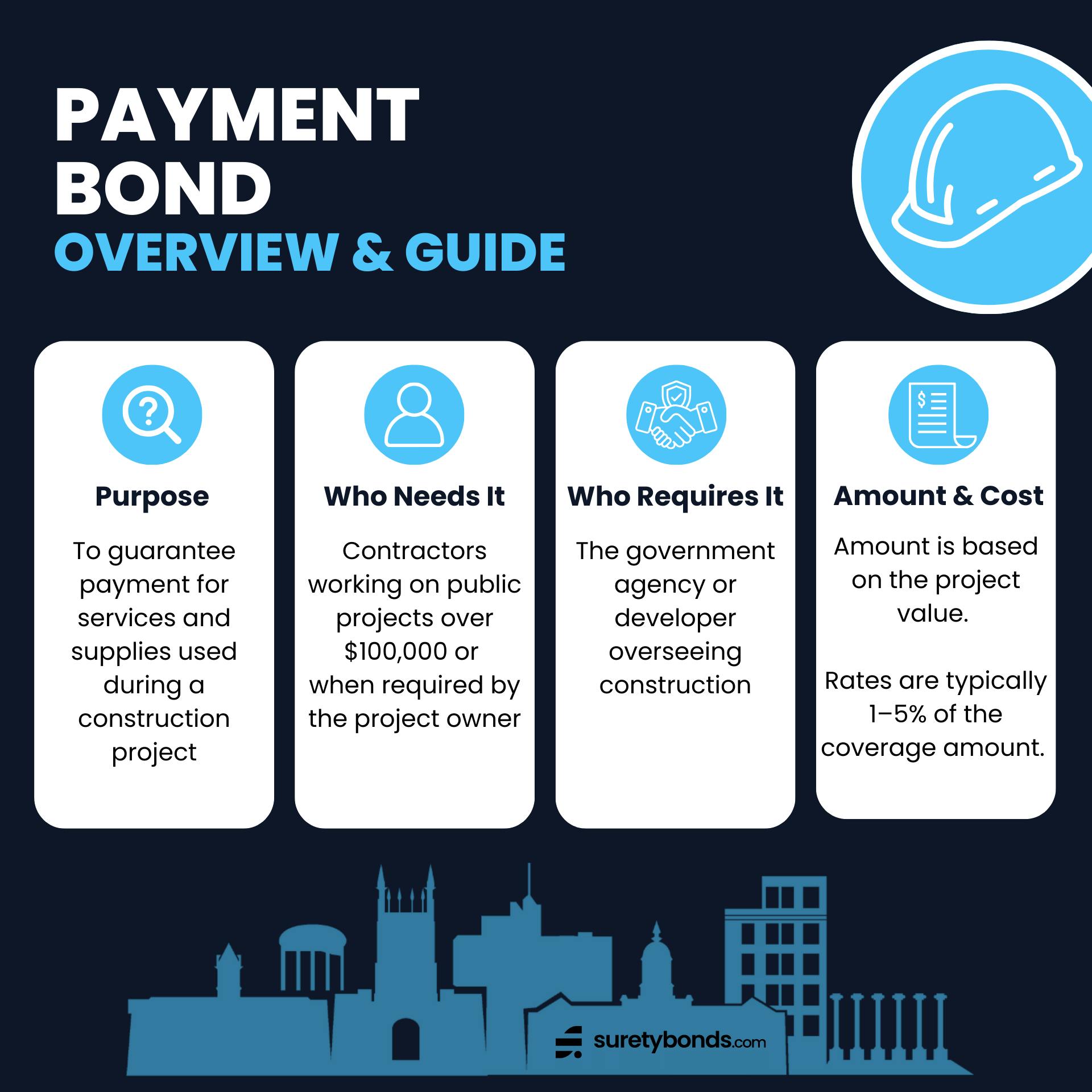
- Purpose: To guarantee payment for services and supplies used during a construction project
- Who Needs It: Contractors working on public projects over $100,000 or when otherwise required by the project owner
- Regulating Body: The government agency or developer overseeing construction
- Required Amount: Based on the bid value of the project at hand
- Premium Rates: Typically 1–5% of the coverage amount, based on underwriting review
Continue reading to learn how to get bonded quickly and easily.
What Is a Payment Bond?
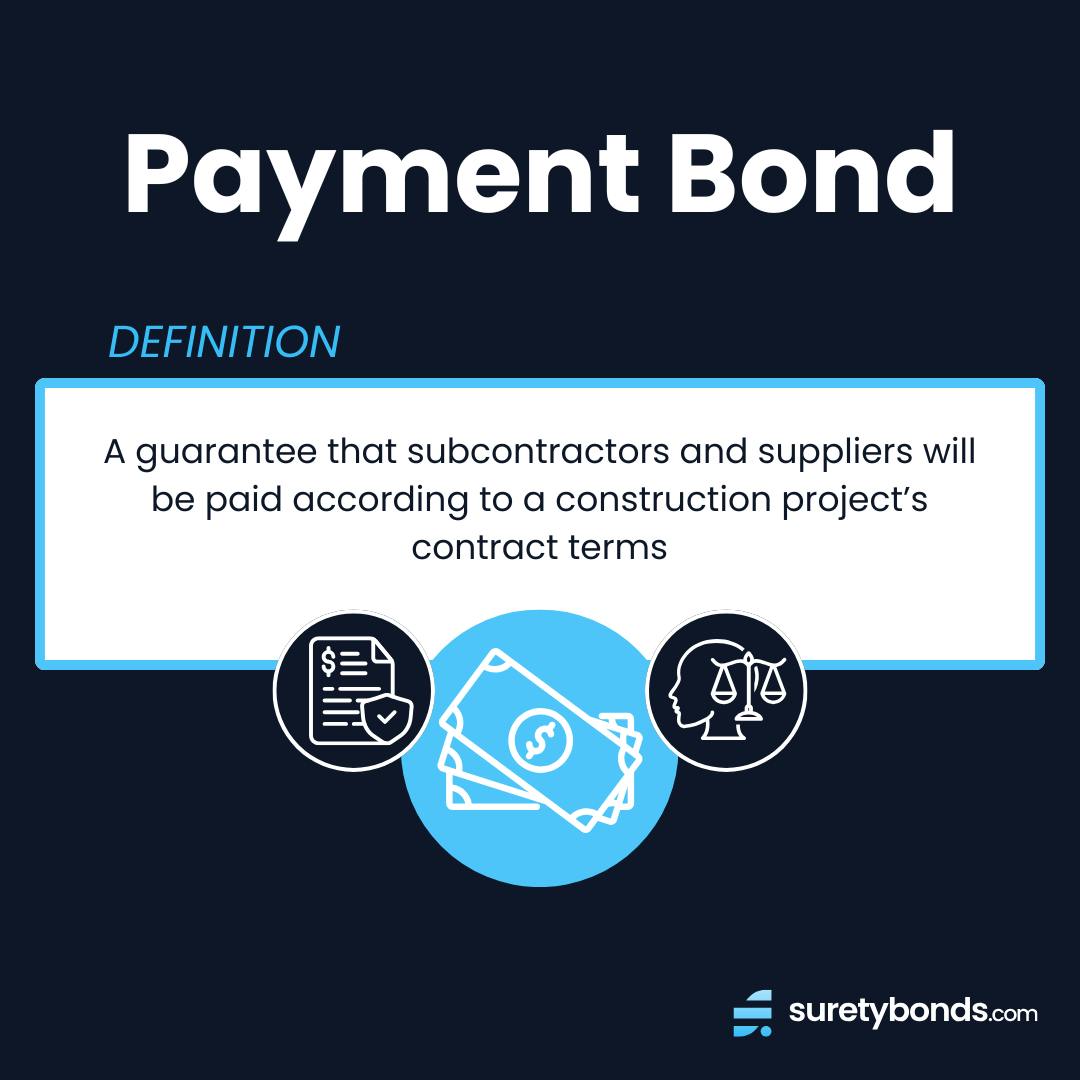
Payment bonds are surety bonds that ensure subcontractors and material suppliers are paid according to the contract. These bonds are critical for jobs on public property where mechanic’s liens cannot be used.
SuretyBonds.com is licensed to issue payment bonds nationwide. As the industry’s top surety provider, we offer the best service, fastest delivery and most affordable payment and performance bond prices.
Other common names for payment bonds include:
- Construction bonds
- Labor and material bonds
- Miller Act bonds
How It Works: The 3 Parties Involved
A payment surety bond binds three entities together in a legal contract:
- The obligee is the project owner requiring the bond to ensure the contractor pays subcontractors and suppliers appropriately.
- The principal is the contractor who signs and pays for the bond.
- The surety is the provider that issues the bond, guaranteeing payment for subcontractors and material suppliers.
If payment is not made, the wronged party can file a claim on the bond. The surety provider will make sure they are compensated appropriately for their loss.
How Much Does a Payment Bond Cost?
Payment bond rates typically fall around 3% of the total bond amount. That means a $100,000 payment bond would cost $3,000.
Underwriters use the following factors will determine exact rates:
- Project size and contract terms
- Bond coverage amount
- Personal credit score
- Financial credentials
- Work history
Work with SuretyBonds.com to get the lowest rate available with no additional fees.
Credit Requirements for Payment Bond Coverage
Payment bonds are riskier than standard commercial bonds. As such, they can be more difficult to qualify for — especially for a contractor with a poor work history, low credit score or other financial problems.
To qualify for the SuretyBonds.com construction bonding program, you must have a credit score of 700+.
When Do You Need a Payment Bond?
General contractors purchase payment bonds when negotiating a construction contract to reassure subcontractors and suppliers that they will be paid appropriately and on time. They are often purchased in conjunction with performance bonds for a new project.
Why Are They Required in Construction?
The Federal Miller Act requires surety bonds for all publicly funded projects that exceed $100,000.
Surety bonds also take the place of mechanic’s liens when contractors work on public property. Mechanic’s liens, which ensure payment of outstanding debts upon sale of a property, can be placed on private property but not on public property.
Payment Bonds vs Performance Bonds: What’s the Difference?
Performance bonds are often issued at the same time and even in the same form as payment bonds, but they serve different purposes:
- Payment bonds promise payment for subcontractor services and materials.
- Performance bonds guarantee successful project completion.