Subdivision Bond Guide
SuretyBonds.com offers the best service and fastest delivery for subdivision construction bonds in the industry. Learn how to get yours in this quick guide.
Bond Overview
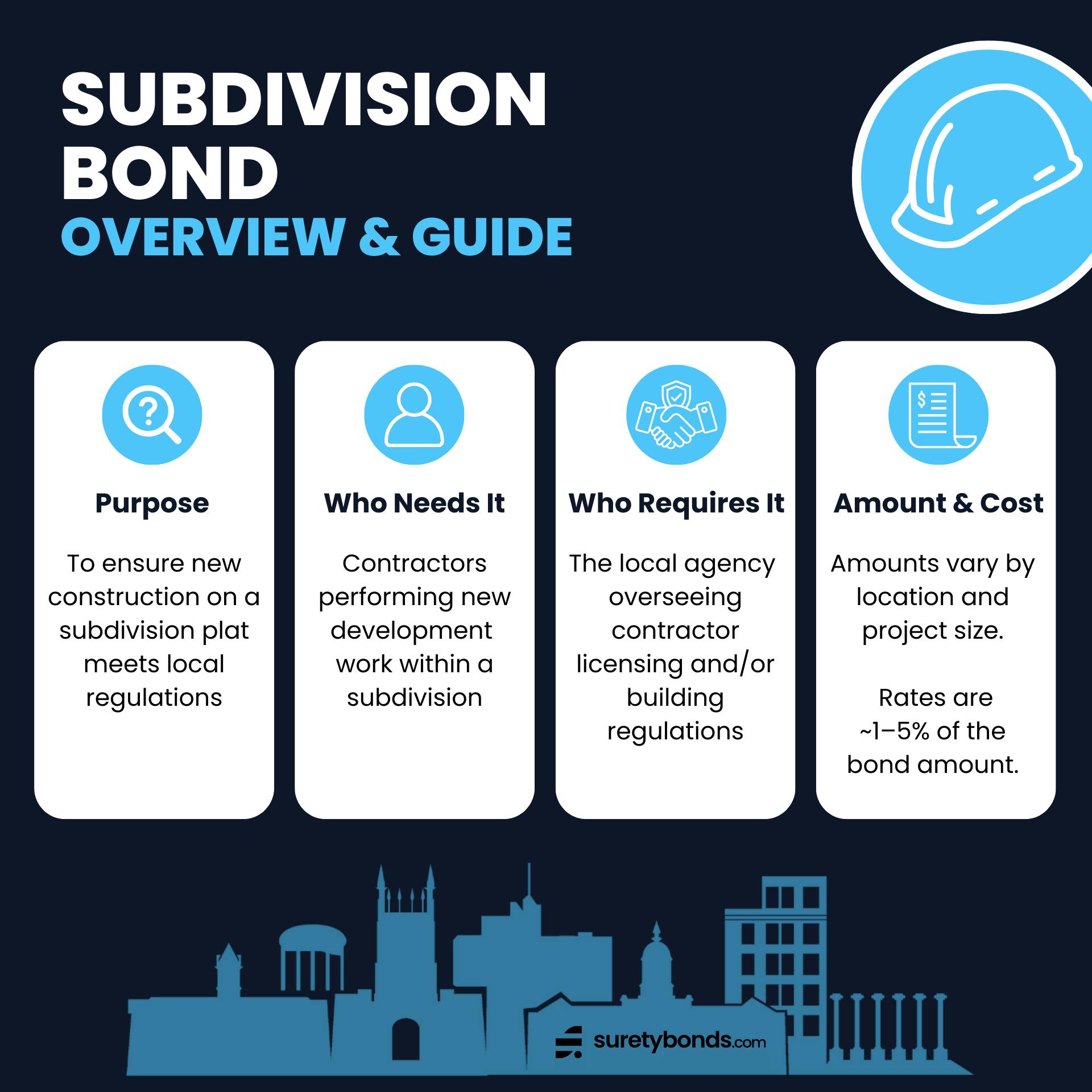
- Purpose: To make sure contractors build public structures within subdivisions according to local specifications
- Who Needs It: Contractors performing new development work within a subdivision
- Regulating Body: The local government agency overseeing contractor licensing and/or building regulations
- Required Amount: Varies based on the value and scope of the project at hand
- Premium Rates: Typically 1–5% of the coverage amount, based on underwriting review
Continue reading to learn how to get bonded quickly and easily.
What Is a Subdivision Bond?
A subdivision bond, or plat bond, ensures any type of subdivision construction project — from streets and houses to gutters and drainage ditches — is completed according to contract specifications.
These bonds are also commonly known as:
- Developer Bonds
- Improvement Bonds
- Plat Bonds
- Subdivision Performance Bonds
If you’re heading any type of subdivision construction, your local government will likely require you to file a surety bond.
SuretyBonds.com is the nation’s top surety provider. We offer the best service, fastest delivery and most affordable subdivision bond prices in the industry.
How Much Does a Subdivision Bond Cost?
Subdivision performance bond premiums are typically 3% of the total bond amount, which would translate to just $3,000 for $100,000 of coverage.
The exact cost is calculated through underwriting, which considers these factors:
- Contract size and terms
- Bond coverage amount
- Work history
- Personal credit score
- Financial credentials
Find your exact subdivision bond price by requesting a free quote now.
What Are the Application Requirements?
Subdivision maintenance bonds are highly risky and require a thorough application process to ensure financial credibility. To qualify for our construction bonding program, applicants must have a minimum credit score of 700.
SuretyBonds.com can offer $250,000 of single job limit bonding coverage or $500,000 of aggregate limit bonding coverage.
How Do Subdivision Surety Bonds Work?
Subdivision projects represent a significant portion of construction revenue in recent years. Surety bonds help ensure everyone is on the same page regarding project expectations.
Subdivision construction bonds bind three entities in a legal contract:
- Obligee: The regulatory body that requires the bond
- Principal: The project owner who files the bond to guarantee project completion
- Surety: The company that issues the bond and backs the principal
Our underwriters can fully process your bond in just 2-3 business days. Contact us now to get started.
What Does a Subdivision Development Bond Guarantee?
If the contractor fails to complete the subdivision project or breaks the bond terms in another way, harmed parties can file a claim. The surety guarantees financial compensation up to the bond amount for valid claims. The surety will not assume the loss, however, as the developer must reimburse claims.
These bonds also make it possible to file plats with the county or city before the project is completed.
Subdivision Bonds vs. Performance Bonds
Subdivision bonds are a type of construction performance bond specific to land within subdivisions. The primary difference between subdivision and performance bonds is that the subdivision project owner pays for the bonded improvements rather than the obligee.