Bid Bond Guide
SuretyBonds.com is legally licensed to issue construction bid bonds nationwide. Learn how to get your bid bond in this guide.
Bond Overview
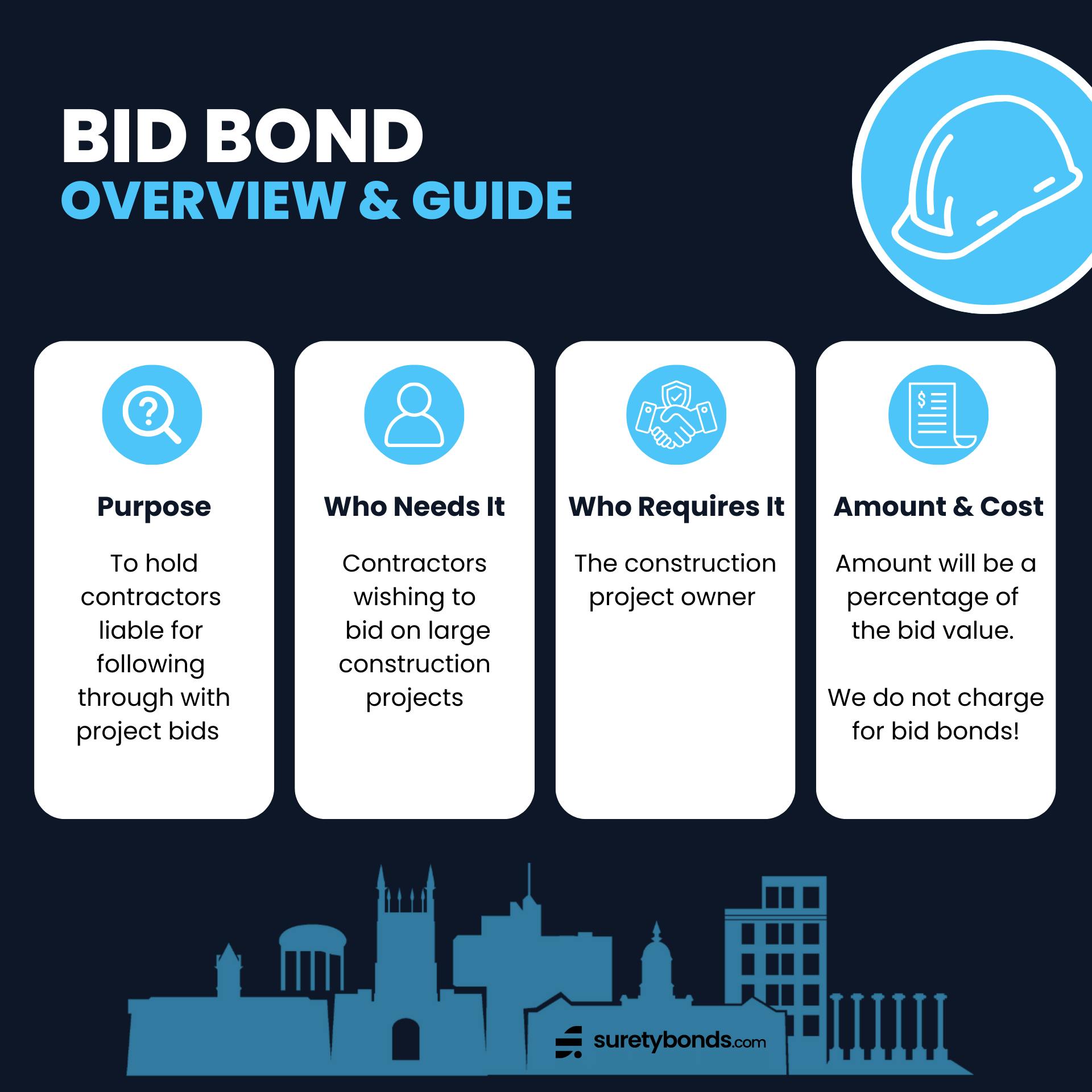
- Purpose: To hold contractors liable for following through with project bids
- Who Needs It: Contractors wishing to bid on large construction projects
- Regulating Body: The construction project owner
- Required Amount: A percentage of the bid amount as determined by the project owner
- Premium Rates: SuretyBonds.com does not charge for bid bonds.
Read on to learn more about how construction bonding process works.
What Is a Bid Bond in Construction?
A bid bond is used as financial security for contract bid proposals — especially for large projects such as commercial developments.
Project developers have contractors file bid bonds to guarantee they provide serious bids and are financially stable enough to complete the project. Without filing the required bond, a contractor’s bid will be automatically disqualified.
How Much Does a Bid Bond Cost in Construction?
SuretyBonds.com does not charge for bid bonds. However after winning a bid, a performance bond for the contract is necessary. Performance bonds are typically priced at 3% of the full bond amount.
How Does a Bid Bond Work?
Contractors have been known to submit low bids to secure a contract, then increase the price or refuse to complete the project altogether. To combat this problem, project owners began requiring bid bonds.
There are three parties involved in a bid bond contract:
- The Principal: The contractor who purchases the bond
- The Obligee: The project owner who requires the bond
- The Surety: The provider who issues the bond and backs the contractor
How to Get a Bid Bond
What do you need to secure a bid bond? If a specific form is required, it should be included in the bid packet you received from the project owner. Otherwise, your surety provider can use a standard application, which includes the following questions:
- How much is your bid?
- When is the bid date?
- Have you ever been bonded before?
- How long has your company been in existence?
- What is your credit score?
If you plan to submit a bid above $250,000, you may need to provide additional financial credentials with your bond application.
How Fast Can You Get a Bid Bond?
SuretyBonds.com provides the fastest and easiest way to get a construction bond. Apply online today and a specialist will follow up within one business day!
Once your application is approved, we’ll instantly send a digital copy of your bid bond. If you’re in a rush, you can select overnight shipping for your physical bond form.
Why Use a Bid Bond?
Bid bonds are a form of insurance that protects developers from loss. They benefit project developers in two key ways:
- Contractor Insurance: With bid bonds in place, developers know the surety provider backs the contractor and will provide the necessary performance bond if the contract is awarded.
- Price Security: Developers receive financial security if the selected contractor backs out. In this situation, the developer can file a claim to recover the difference between the lowest and second-lowest bids.
How To Withdraw Your Construction Bid Without Losing Your Bond
Contractors can only withdraw a bid without losing the bid security (the bond) if the withdrawal happens before the developer opens the bid. Once a contract is awarded, bid withdrawal will result in the automatic loss of the bond.
What Is the Difference Between a Bid Bond and a Performance Bond?
Both are common types of construction bonds required for most contracted projects. However, they are not the same:
- Bid bonds protect developers from losing money during the bidding process.
- Performance bonds guarantee that a contractor will complete a project after winning the bid.