Tennessee Money Transmitter Bond Overview
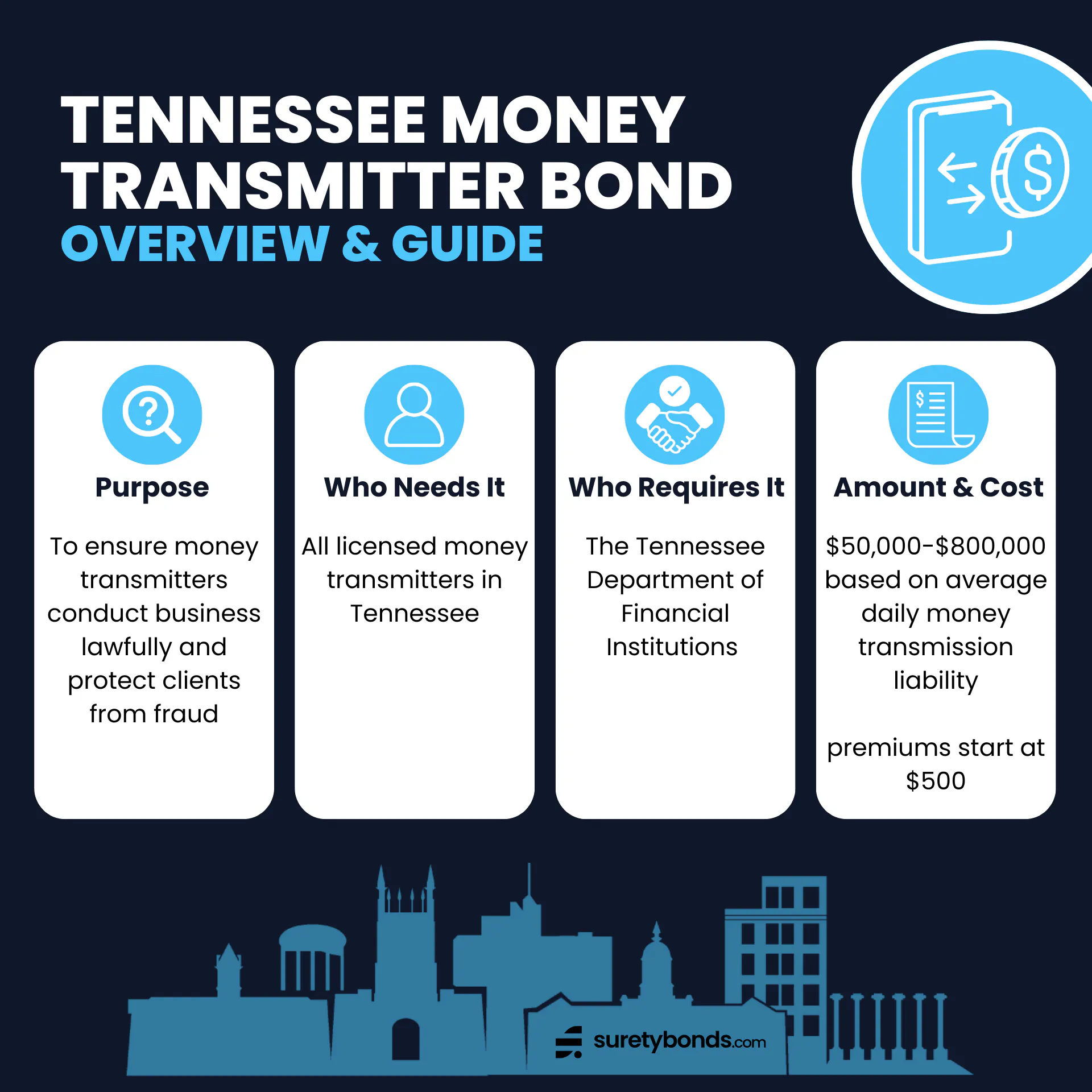
- Purpose: To protect clients from fraud and ensure money transmission are financially responsible
- Who Needs It: All licensed money transmitters in Tennessee
- Regulating Body: The Tennessee Department of Financial Institutions
- Bond Amount: $50,000–$800,000; based on average daily money transmission liability amount
- Minimum Price: $500 or 1%
What Is a Tennessee Money Transmitter Bond?
A Tennessee money transmitter bond ensures money transmitters follow Tennessee Code and are financially responsible if they commit fraud.
This bond protects clients from potential illegal activity or unethical business practices by any business that provides money transmission services in Tennessee.
Who Needs a Money Transmitter Bond?
The Tennessee Department of Financial Institutions requires all money services businesses (MSBs) to have a money transmitter bond.
Tennessee defines a MSB/money transmitter as any individual or company that completes any of the following activities:
- Bill paying
- Electronic money transmitting
- Foreign currency dealing/exchanging
- Issuing and/or selling drafts, money orders, paid access/store value, and/or travelers checks
- Payroll processing services
Note: We do not currently have any surety markets that issue these bonds for cryptocurrency ATM operators.
What Are the Bond Coverage Requirements?
Tennessee money transmitters need a minimum $50,000 surety bond. If your average daily money transmission liability is greater than $50,000, you’ll need a bond equal to that average value.
The average daily money transmission value is calculated for the most recently completed calendar quarter up to a maximum of $800,000. For example, if you average at $600,000 of daily transmission, you will need a $600,000 surety bond.
How Much Do Money Transmitter Bonds Cost in Tennessee?
Tennessee money transmitter bonds vary in cost based on bond coverage amount, credit score and sometimes other financial factors.
Applicants with strong credit often qualify for a 1% premium. Get your personalized quote today starting at $500!
SuretyBonds.com offers the lowest available rates from our nationwide provider network with no added fees.
How Does a Tennessee Money Transmitter Bond Work?
A money transmitter bond creates a legal agreement and financial guarantee between three parties.
| Bond Party | Description |
|---|---|
| 1. Principal | The licensed money transmitter business owner(s) |
| 2. Obligee | The Tennessee Department of Financial Institutions |
| 3. Surety | The issuing surety provider |
If a money transmitter is guilty of fraud and contract terms are broken, a claim can be made to recover damages. The surety will pay valid claims and the principal must then reimburse the surety.
How Do I Get a Money Transmitter Bond in Tennessee?
To get your Tennessee money transmitter bond, complete the following steps:
- Verify your bond amount
- Apply for free online
- Receive your personalized quote
- Pay through the secure payment portal
How Do I File My Bond?
After purchasing your bond, the surety will upload your bond on behalf of you to NMLS. Surety bonds submitted in the Document Uploads section will not be accepted.
While the surety uploads your bond, you still need to authorize the surety in NMLS. To complete the bonding process in NMLS, complete the following steps:
- Log in to your NMLS account
- Click the Tasks tab from the Home screen
- Select Surety Bonds
- Click Authorized Surety Entities
- Search for your surety by selecting Add Surety and enter the surety identifier (NAIC/NPN) or Surety Entity Name
- Select Grant Authority
Read Granting Authority to Your Surety Bond Issuer for more information.
How Do I Renew My Money Transmitter Bond?
Money transmitter licenses expire annually on December 31st. When renewing your license, you’ll also need to renew your surety bond.
Within 90 days of the expiration date, a SuretyBonds.com representative will contact you about the renewal process.
How Do I Update My Bond Information?
If you need to update simple information on your bond form, you can sometimes do so with a bond rider. This is the only legal method of updating without invalidating the original bond.
Just email [email protected] what needs to be fixed and they will assist you.
How to Get a Money Transmitter License in Tennessee
Before applying for a money transmitter license, verify your eligibility. Prerequisites for applicants include the following:
- Tennessee Secretary of State Registration
- FinCEN Money Services Business (MSB) Registration
- Tangible net worth of $100,000 (or greater if total assets exceed $100 million)
To apply for a money transmitter license in Tennessee, complete the process through the Nationwide Mortgage Licensing System (NMLS). Include the following materials in your application:
- Completed MU1 and MU2 forms with all applicable documents attached in the Document Uploads section
- Audited financial statements from the most recent fiscal year
- List of UAAR reporting authorized agents (delegates) and locations
- A surety bond in the proper amount
For more detailed information check out the NMLS Licensing Checklists, requirements, and Fees.
How Much Does It Cost to Get a Tennessee Money Transmitter License?
You’ll pay $1,670 in submission fees when applying for your money transmitter license in NMLS — not including your surety bond premium. You can expect the following cost breakdown when getting your money transmitter license:
| Fee Type | Cost Amount |
|---|---|
| License Registration Fee | $1,550 |
| NMLS Processing Fee | $120 |
| Surety Bond Premium* | $500+ |
*Surety bond premiums vary based on credit score.