Surety Bonds for the Transportation Industry
Many businesses involved in the freight process are required to file a bond to operate legally. Whether you’re arranging shipments or moving freight across the country, you likely need a surety bond.
In this guide, we’ll break down the different transportation industry bond requirements and explain how to get the bond you need.
What Are Freight Industry Bonds?
Freight bonds form a three-party legal contract between:
- Principal: The motor carrier, broker or forwarder filing the bond
- Obligee: The government agency requiring the bond
- Surety: The issuing surety provider
From trucking companies to cargo intermediaries, business owners in the freight industry often need to file at least one surety bond. Bonds serve different purposes, such as guaranteeing tax payments and protecting public roads from damage.
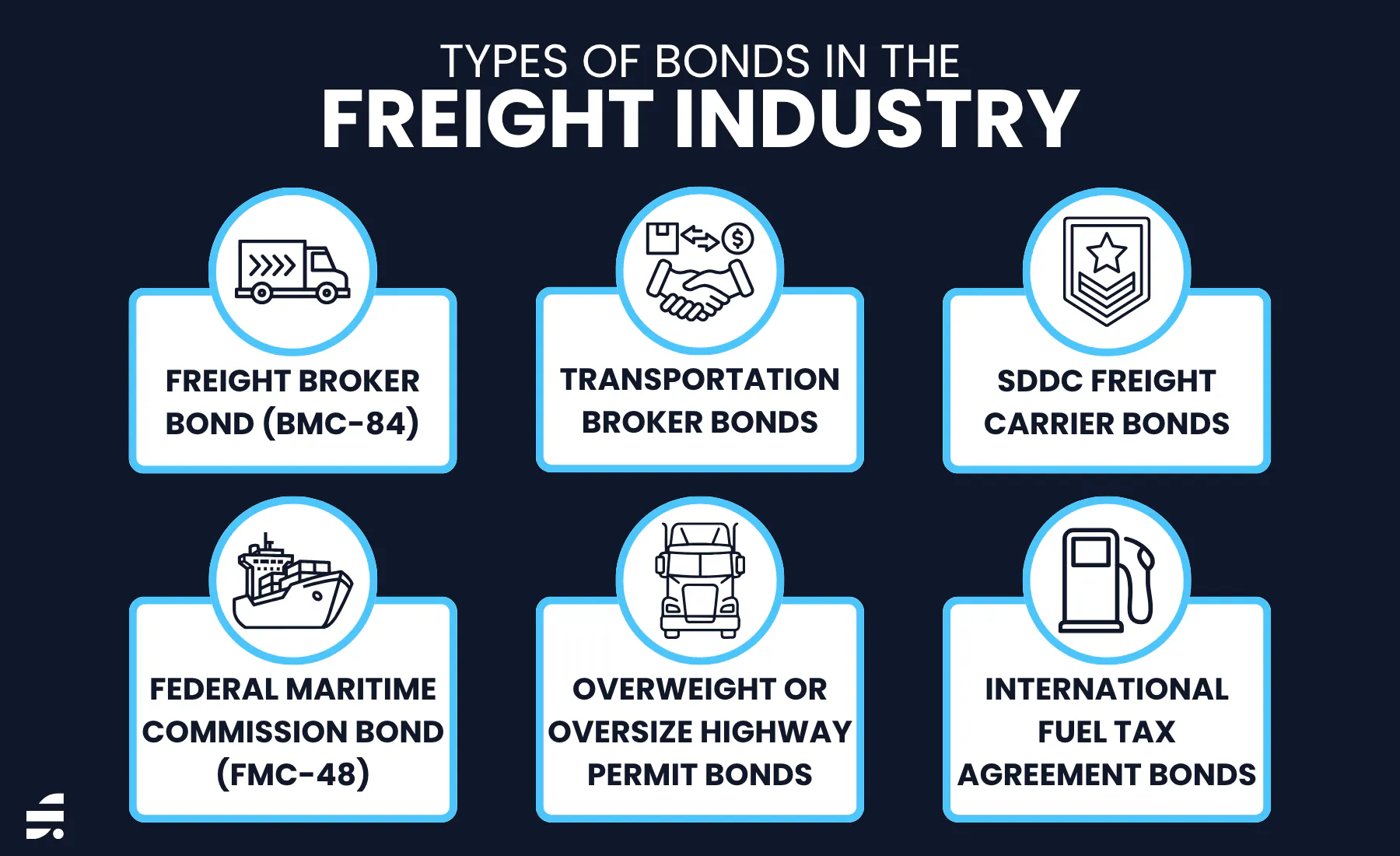
| Surety Bond | Obligee | Why It's Required |
|---|---|---|
Freight Broker Bond (BMC-84) | The Federal Motor Carrier Safety Administration | Ensures freight companies follow regulations and pay all motor carriers |
Federal Maritime Commission Bond (FMC-48) | The Federal Maritime Commission | Guarantees that ocean transportation intermediaries meet all FMC regulations and fulfill financial responsibilities |
Overweight or Oversize Highway Permit Bonds | State agencies in Texas, New York, Louisiana, Arkansas, Oklahoma, Michigan, Pennsylvania, Maryland, Georgia and Oregon | Holds overweight and oversize motor carriers financially liable for road damage |
International Fuel Tax Agreement (IFTA) Bonds | State agencies in Arizona, Illinois, Kansas, Minnesota, Texas, Nebraska and Wisconsin | Guarantees tax payments and legal compliance by interstate motor carriers |
Transportation Broker Bonds | State agencies in Pennsylvania, Illinois, North Carolina, California and Virginia | Ensures safe and legal transportation practices, plus pay for carriers |
Military Surface Deployment and Distribution Command (SDDC) Freight Carrier Bonds | The Military Surface Deployment and Distribution Command (SDDC) | Guarantees military freight carriers will deliver goods according to contract terms |
What Bonds Are Required for My Business?
You’ll need to determine your exact bond requirements based on your operations. At multiple stages of the shipping process, the state and the public are protected by surety bonds.
Use the table below to identify the bond requirements for your business type.
| Company Type | Role | Bonds Needed |
|---|---|---|
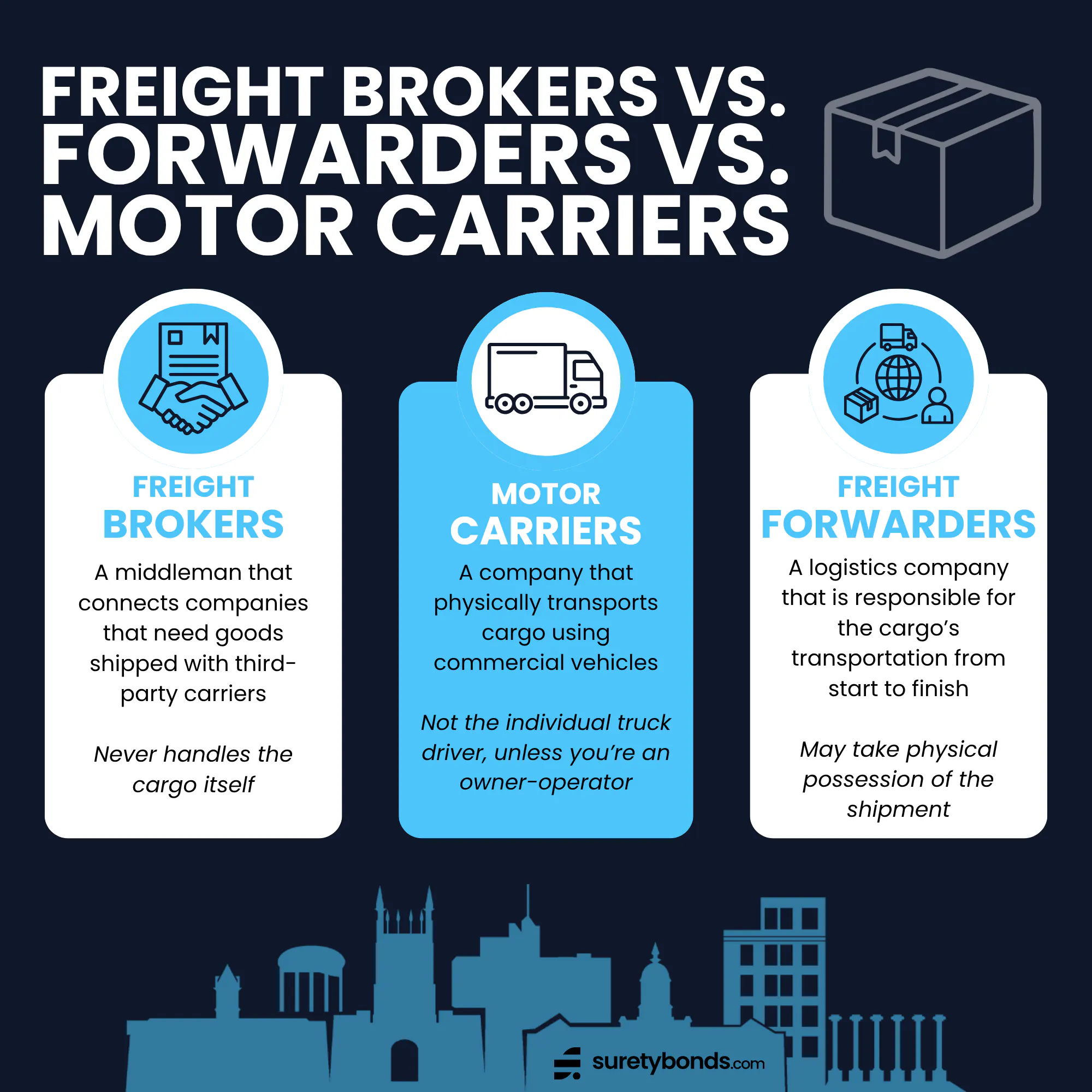
Motor Carrier | A company that physically transports goods, not the individual truck driver, unless you’re an owner-operator | Overweight/oversize permit bonds (where required), IFTA bonds (where required) |
Freight Broker | A middleman that connects companies that need goods shipped with third-party carriers | BMC-84 bond (federal), transportation broker bond (where required) |
Freight Forwarder | A logistics company that is responsible for the cargo’s transportation from start to finish | BMC-84 bond (federal) |
Ocean Transportation Intermediary | An international middleman organizing sea freight | FMC-48 bond (federal) |
U.S. Military Transportation Service Provider | A trucking company or broker contracted to move freight for the Department of Defense | SDDC freight carrier bond (federal) |
Not every state requires oversize hauling bonds, IFTA bonds or transportation broker bonds. This means you may only need to file a federal bond, like a BMC-84, depending on where you operate. If you’re traveling between states, you’ll also need to consider how the requirements may change.
What’s the Difference Between a Freight Broker, Forwarder and Motor Carrier?
While each plays a role in transporting goods, they have different responsibilities within the process. Brokers and forwarders handle logistics by arranging the movement of cargo, while motor carriers are responsible for physically transporting shipments. Because each operates differently, they have different license and bond requirements.
How Much Bond Coverage Do I Need?
The only bond with a flat required amount is the $75,000 BMC-84 bond. Most vary based on state and other factors.
| Bond Type | Coverage Required |
|---|---|
| BMC-84 Bond | $75,000 |
| FMC-48 Bond | $50,000 for ocean freight forwarders, $75,000 for non-vessel-operating common carriers |
| Overweight/Oversize Permit Bonds | $1,000–$100,000, based on state and permit factors |
| IFTA Bonds | $1,000—$600,000, typically based on tax and reporting history |
| Transportation Broker Bonds | $5,000–$25,000, based on state |
| SDDC Freight Carrier Bond | $25,000–$100,000, based on the number of states you operate in |
How Do I Get a Freight Bond?
Once you know which bonds you need, just enter your information into our secure online portal. These bonds typically require a soft credit check to determine your exact rate. If you need multiple bonds, you’ll need to apply separately for each. We’ll send you a free quote within one business day!
Can One Bond Cover Every Requirement?
No, each bond is filed with a different agency and guarantees a different obligation. For example, freight broker bonds ensure that brokers pay their motor carriers, while IFTA bonds ensure that those motor carriers pay taxes when traveling between states.
Do I Need a New Bond for Each State?
If you’re a freight broker or forwarder, your BMC-84 bond is a federal requirement. So, you don’t need state-specific bonds unless you’re in a state that requires a transportation broker bond.
If you’re a motor carrier that needs an IFTA bond, you only need to be bonded in your home state. However, for oversize permit bonds, you’ll need one in each state you travel through that has a bond requirement. Since these bonds specifically protect local public roads and infrastructure, a bond in your home state won’t apply to roads in another state.
Can I Use an Alternative to a Surety Bond?
Typically, you must file a surety bond to get a motor carrier or broker license. However, the BMC-85 trust agreement is a special exception. Freight brokers and forwarders can choose to put $75,000 in a trust fund instead of filing a surety bond. However, this requires full collateral upfront, making it less affordable for smaller brokerages.
The FMSCA recently began enforcing stricter financial responsibility requirements, meaning up to 90% of trustees no longer qualify. If you choose not to file a surety bond, be sure your assets are approved.
How Do I Become a Freight Broker?
Once you establish your business structure, you’ll need to file the required application forms with the FMCSA. This includes the $75,000 freight broker (BMC-84) bond. Read our complete guide to getting a freight broker license for detailed information.
Want to Learn More?
Visit our Surety Bond Education Hub for helpful guides and answers to common questions about surety bonds. Or, give us a call at 1 (800) 308-4358 to speak with a surety expert today!