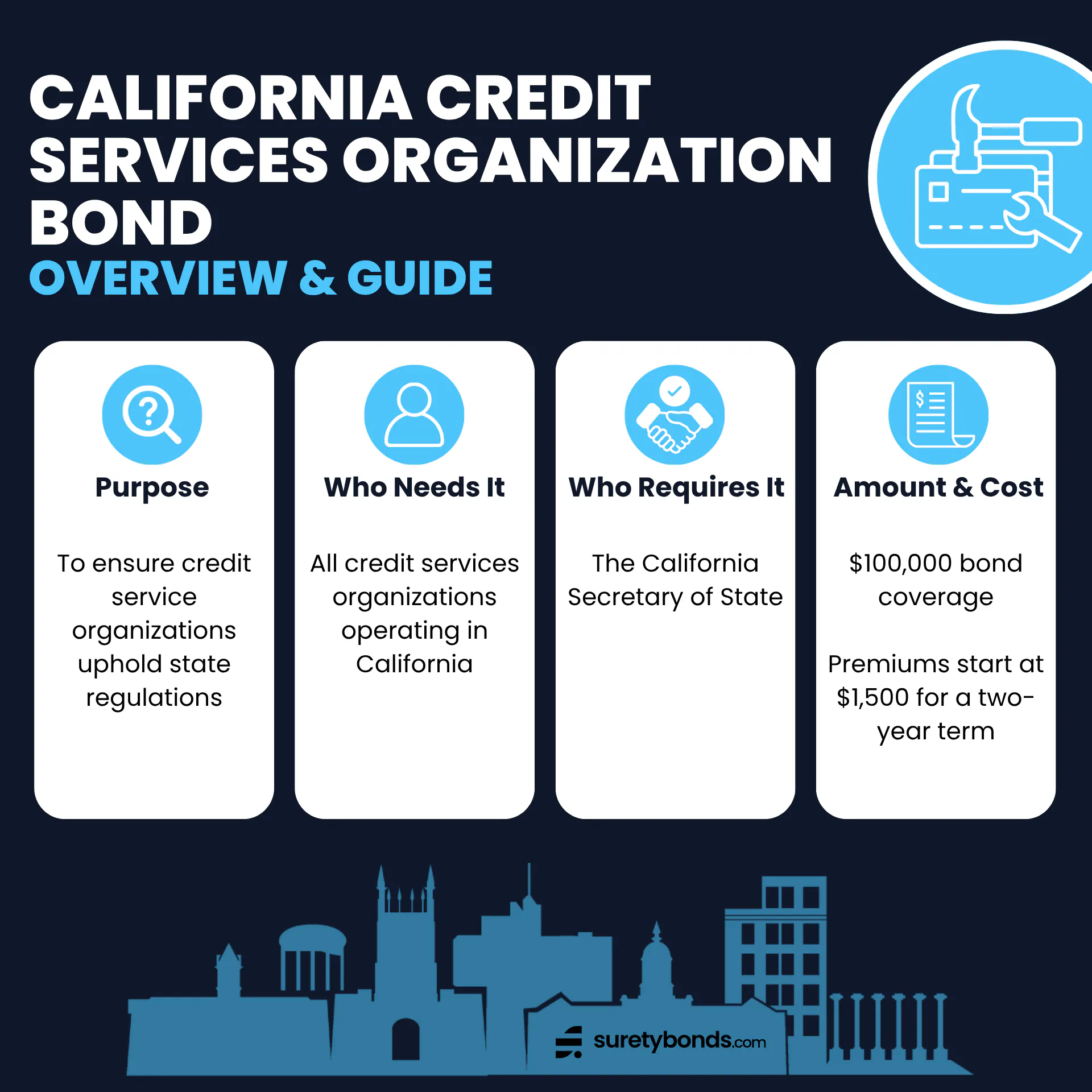
California Credit Services Organization Bond Overview
- Purpose: To ensure credit service organizations uphold state regulations
- Who Needs It: All credit services organizations operating in California
- Regulating Body: The California Secretary of State
- Bond Amount: $100,000
- Minimum Price: $1,500, credit-based
What Is a California Credit Services Organization Bond?
A California credit services organization (CSO) bond protects the public from unfair and damaging credit repair practices.
The California Secretary of State (SOS) requires all CSO owners to file a surety bond when registering with the Department of Justice.
How Much Do CSO Bonds Cost in California?
The $100,000 California CSO bond starts at just $1,500, or 1.5% of the bond amount. Your exact rate will depend on your personal credit score.
Click below to apply for a free quote.
SuretyBonds.com offers the lowest available rates from our nationwide provider network with no added fees.
How Does a California Credit Services Organization Bond Work?
A California credit services organization bond forms a legal contract between these three parties.
| Bond Party | Description |
|---|---|
| Principal | The credit services organization owner filing the bond |
| Obligee | The California Secretary of State requiring the bond |
| Surety | The issuing surety provider |
By filing this bond, you promise to follow all laws and operate ethically. Under CA Civ Code § 1789.13, the following acts are prohibited:
- Charging upfront fees before fully completing services
- Failing to provide monthly statements of services performed
- Making false or misleading credit statements
- Removing accurate, current credit information
- Helping consumers create fake or new identities to build credit
- Directly extending credit to consumers
If you violate these terms, harmed parties can file claims against your bond. The surety will pay valid claims up to the full bond amount. However, you must ultimately refund the surety
How Do I Get a Credit Repair Organization Bond in California?
With SuretyBonds.com, you can start the CSO bonding process online 24/7. Once you enter your information, we’ll run a quick credit check to determine your exact rate. You’ll receive a free quote within one business day.
How Fast Can I Get My Bond?
It takes just a few minutes to fill out the form on this page. After payment, we’ll email your official bond form instantly.
Be sure to file your bond with the California SOS before applying for registration.
Can I Get Bonded With Bad Credit?
Yes, you may still be able to get bonded with bad credit through our bad credit bonding program. Apply for a free quote to get started.
How Do I Renew My CSO Bond?
California CSO bonds expire every two years. We’ll send you reminders by phone and email starting 90 days before expiration. Once you pay the attached invoice, we’ll issue a continuation certificate to extend your bond for another term.
Can I Make Changes to My Bond?
Yes, you can typically make minor changes to your bond form by contacting your surety company. Current customers can email [email protected] with the updated information.
How to Register a Credit Services Organization in California
The California Department of Justice (DOJ) regulates the credit services organization registration process.
First, you’ll need to file the $100,000 CSO surety bond with the Secretary of State. Then, submit the following documents to the DOJ:
- Contract
- Information statement
- Separate notice of cancellation
- Any other documents the buyer needs to sign
- $100 filing fee
Your application cannot be approved until the SOS confirms your bond filing.
Mail all materials to the address below:
Department of Justice
Attorney General's Office
P.O. Box 85266
San Diego, CA 92186-5266
How to Renew Your Registration
California CSO registrations expire one year from the issue date. The DOJ doesn’t send renewal notices, so you’ll need to submit the renewal form on time and update your surety bond accordingly.
Do I Need a License to Do Credit Repair in California?
Yes, anyone who offers to improve someone else’s credit score for a fee needs to register with the state. The only exception is when you perform these services on your own behalf.