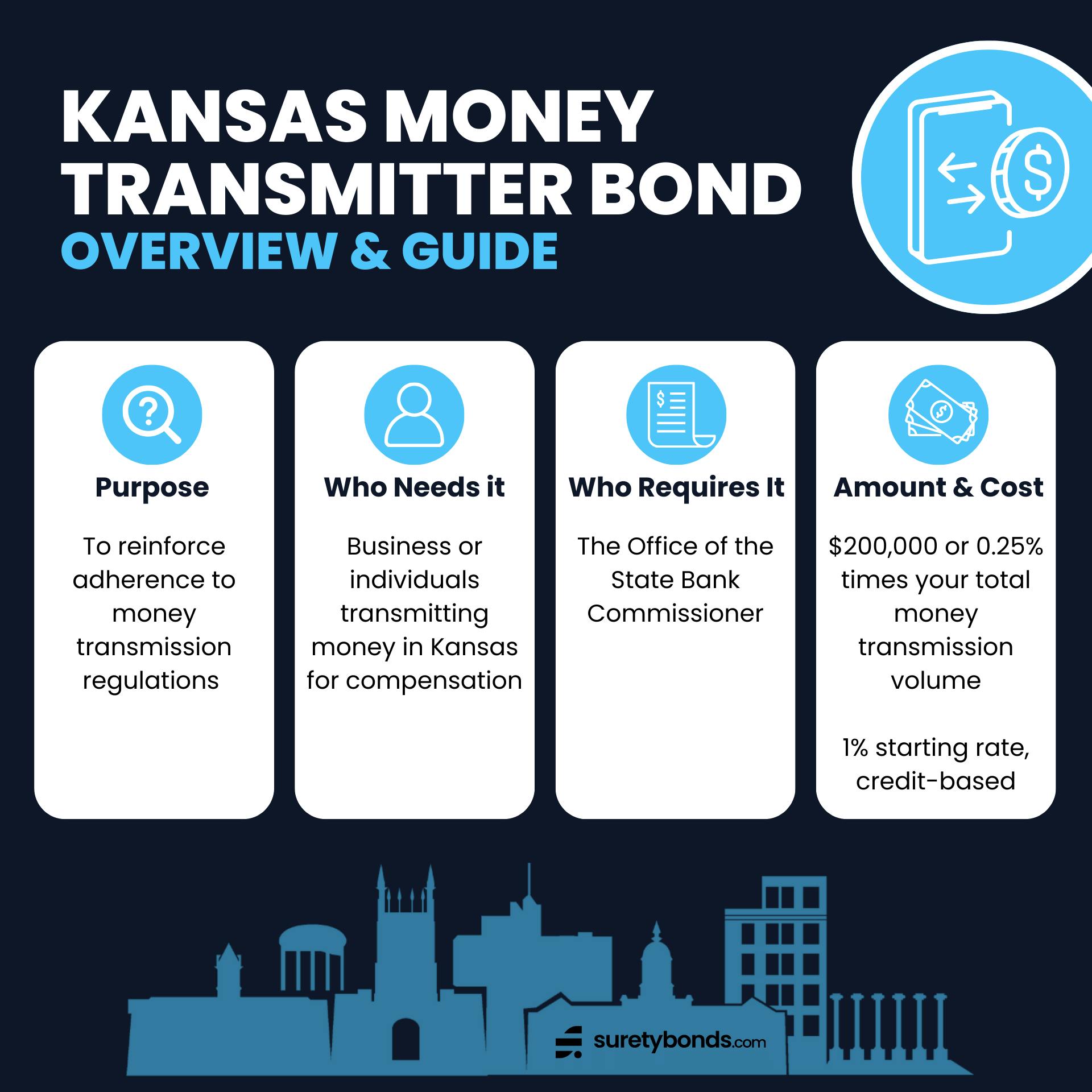
Kansas Money Transmitter Bond Overview
- Purpose: To reinforce adherence to money transmission regulations
- Who Needs It: Entities transmitting money in Kansas
- Regulating Body: The Office of the State Bank Commissioner
- Bond Amount: $200,000–$350,000
- Minimum Price: $2,000 or 1%
What Is a Kansas Money Transmitter Bond?
A Kansas money transmitter bond is a financial guarantee required for businesses that sell payment instruments, offer prepaid access, or transfer money. It is similar to insurance, but protects consumers rather than the business.
Under the bond, companies transmitting money are financially liable if they do any of the following prohibited acts:
- Filing any document or statement that falsely represents or omits a material fact
- Refusing to permit an examination or investigation by the Commissioner
- Failing to pay necessary fees
- Advertising or distributing false information related to money transmission
What Amount of Bond Coverage Do I Need?
The base bond amount is the greater of $200,000 or 0.25% times your total money transmission volume in Kansas as of the most recent year-end.
How Much Do Money Transmitter Bonds Cost?
Kansas money transmitter bond premiums start at $2,000–$3,000 for the minimum $200,000 bond coverage. Rates vary between 1% and 10% of the bond amount based on credit score.
Apply now to get your free quote within one business day or less.
SuretyBonds.com offers the lowest available rates from our nationwide provider network with no added fees.
How Does a Kansas Money Transmitter Bond Work?
A money transmitter bond joins three parties into a legally and financially-binding contract.
| Bond Party | Description |
|---|---|
| 1) Principal | The money transmission entity filing the bond |
| 2) Obligee | The Office of the State Bank Commissioner requiring the bond |
| 3) Surety | The issuing surety provider |
If the principal breaks regulations, consumers will not be held responsible for those financial damages committed by the principal. But, the principal will be responsible for reimbursing the surety for any claims paid through the bond.
How Do I Get a Money Transmitter Bond in Kansas?
Start the bonding process by submitting the money transmitter bond quote request form on this page. We’ll provide a quote within one business day or less. Review and pay your premium invoice online at your convenience.
Once the transaction is processed, we’ll upload the bond to NMLS. However, you’ll need to grant authority to your issuing surety provider. When you log in to your NMLS account, enter the surety’s name or surety identifier (NAIC/NPN), which will be in your email records.
Can I Get Bonded With Bad Credit?
SuretyBonds.com works to provide bad credit bonding options to all applicants. However, money transmitter bonds have stricter requirements since they create a higher level of financial risk. Apply now to confirm if you qualify for a bad credit bond.
How Do I Renew My Money Transmitter Bond?
To renew your Kansas money transmitter bond each year, just pay your renewal premium invoice when prompted. If you work with us, we’ll start notifying you 90 days prior to the expiration date to ensure you don’t have a lapse in coverage.
No additional documentation is needed, unless you need to make a change to the bond.
Can I Make Changes to My Bond?
If minor information has changed for your bond — such as address or name — we can likely issue a bond rider. This is a document that “rides” on top of your existing bond to amend the original information.
Please email the information you need updated to [email protected] for assistance.
How to Get a Money Transmitter License in Kansas
You’ll complete your license application through the Nationwide Multistate Licensing System (NMLS). Follow these steps:
- Set up an account in NMLS
- Purchase your surety bond and meet net worth requirements
- Submit application and supporting documents
- Complete fingerprint-based background checks for all owners and officers
You’ll need to provide thorough documents including a business plan, financial statements, your business registration certificate, and an org chart.
Once licensed, you’ll need to provide annual reporting and maintain an active bond policy to stay compliant.