Ohio Money Transmitter Bond Overview
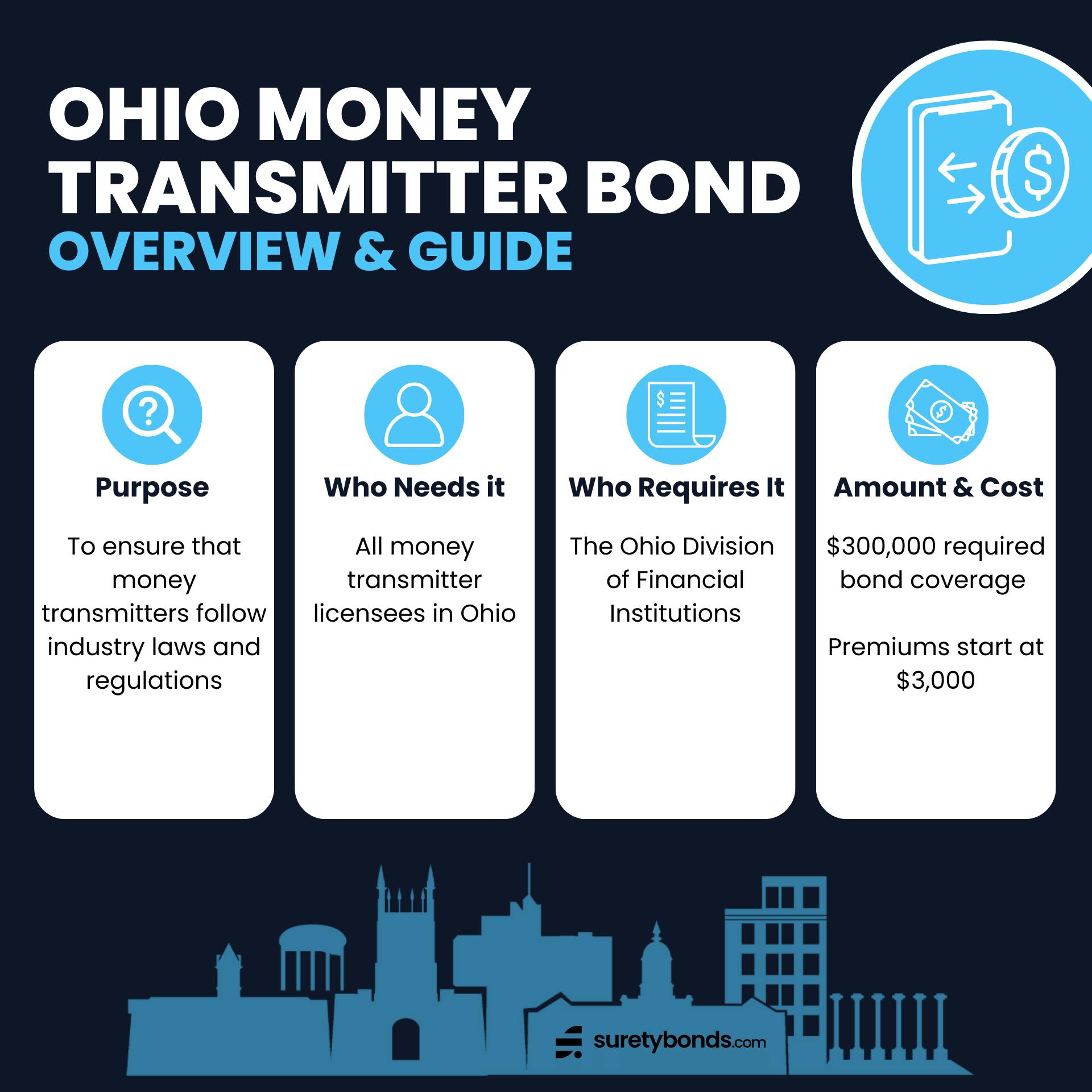
- Purpose: To ensure that money transmitters follow industry laws and regulations
- Who Needs It: All money transmitter licensees in Ohio
- Regulating Body: The OH Division of Financial Institutions
- Bond Amount: $300,000
- Minimum Price: $3,000
What Is an Ohio Money Transmitter Bond?
An Ohio money transmitter surety bond ensures that money transmitters adhere to industry laws and regulations. These bonds join three parties in a legal contract and establish financial security for consumers in Ohio.
| Bond Party | Description |
|---|---|
| 1) Principal | The money transmission company owner(s) filing the bond |
| 2) Obligee | The Ohio Division of Financial Institutions |
| 3) Surety | The issuing surety provider |
What Is the Money Transmitter Law in Ohio?
The Ohio Money Transmitter Law requires anyone performing the following activities for clients in Ohio to be licensed and bonded as a money transmitter:
- Electronic money transmissions
- Non-contract bill pay services
- Issuing drafts, money orders, prepaid access, stored value, or traveler’s checks
- Selling drafts, money orders, prepaid access, stored value, or traveler’s checks
- Exchanging or dealing foreign currency
- Cryptocurrency ATM operations
Please Note: We do not have any active markets that can underwrite money transmitter bonds specifically for cryptocurrency or bitcoin kiosk operators.
How Much Do Money Transmitter Bonds Cost in Ohio?
You’ll need to submit personal and business financials to receive a personalized bond quote. Underwriters will do a soft credit check and review your financial statements to determine your rate.
Ohio money transmitters typically pay 1–5% of the $300,000 bond amount. For example, with excellent financials, you could receive a $3,000 quote for a one-year bond term. Submit a quote request now.
SuretyBonds.com offers the lowest available rates from our nationwide provider network with no added fees.
How Do Bond Claims Work?
If you break any regulations outlined in the Ohio Money Transmitters Act, harmed parties can file claims for reimbursement. The surety will promptly pay those claims, but then you, as the principal, owe the surety back for those funds.
How Do I Get a Money Transmitter Bond in Ohio?
The bonding process starts by submitting an online application. You’ll need to provide your information for a soft credit check and submit personal and business financial statements.
Once the surety reviews your materials, underwriters will determine your personalized rate and send over a quote invoice. You can check out online at your convenience to complete the process.
How Fast Can I Get My Bond?
When you work with an online surety agency like SuretyBonds.com, you can expect a quote within one business day or less.
Tip: Be sure to submit all financial documents promptly to expedite your bond approval and delivery time.
How Do I File My Bond?
We’ll upload your official bond form to NMLS on your behalf. However, you’ll need to grant authority to your issuing surety provider.
When you log in to your NMLS account, enter the surety’s name or surety identifier (NAIC/NPN), which will be in your email records. Your bond can’t be accepted by the DFI until you authorize the surety.
Can I Get Bonded With Bad Credit?
These bonds typically require a good credit score, however, positive financial statements may help you qualify with a lower score. Apply today to see if you are approved for an Ohio money transmitter bond.
How Do I Renew My Money Transmitter Bond?
To renew your bond, you’ll typically only need to pay the renewal premium invoice when prompted. Your SuretyBonds.com representatives will contact you before the bond expires with information and an invoice link to make the process seamless.
How to Get a Money Transmitter License in Ohio
The Ohio Division of Financial Institutions oversees money transmitter licensing. Apply through the Nationwide Multistate Licensing System (NMLS) by following these steps:
- Register your business entity with the state
- Apply online through NMLS
- Upload all supporting documents, including business plan, financial statements, background checks, AML/BSA policies and more
- Purchase a surety bond
- Pay application and licensing fees
This process typically takes a few months from start to finish. If you need help, you can email the Consumer Finance licensing staff at WebDFI‑[email protected]
How Much Does It Cost to Get Licensed?
During the application process, you’ll pay $3,000–$5,000 for your surety bond and will have small fees for credit and background checks.
To submit the final application, the DOC charges a $5,000 non-refundable application fee and the NMLS charges a $120 processing fee.
| Fee Type | Amount |
|---|---|
| Application Fee | $5,000 |
| NMLS Processing Fee | $120 |
| Surety Bond Premium | $3,000+ |