Oregon Money Transmitter Bond Overview
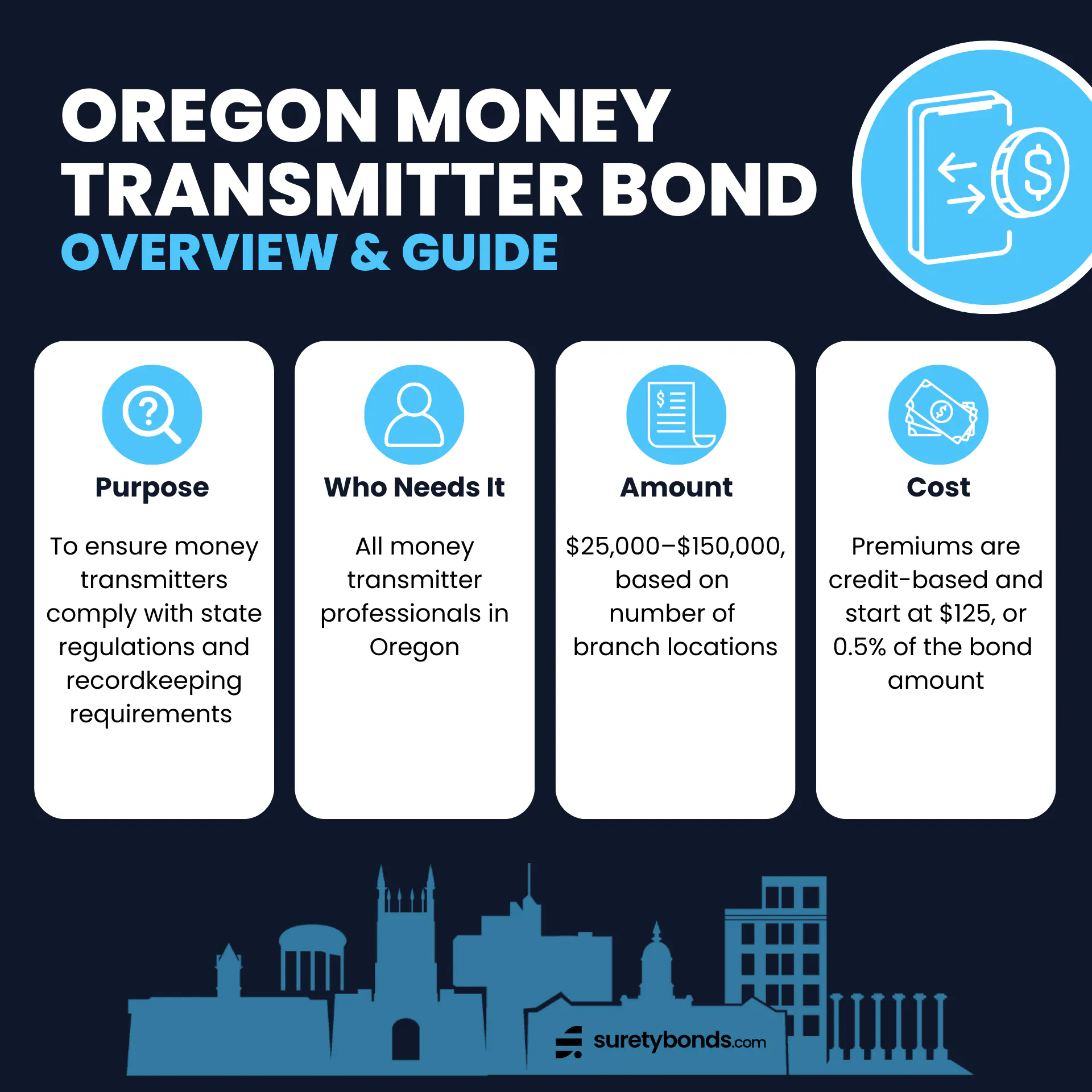
- Purpose: To ensure money transmitters comply with state regulations and recordkeeping requirements
- Who Needs It: All money transmitter professionals in Oregon
- Regulating Body: The Oregon Division of Financial Regulation
- Bond Amount: $25,000–$150,000
- Minimum Price: $125, or 0.5% of the bond amount
In Oregon, money transmitter professionals need a surety bond for state licensing. Read on to learn all about the bonding process.
What Is an Oregon Money Transmitter Bond?
If you’re applying for a money transmitter license in Oregon, the Division of Financial Regulation (DFR) requires you to file a surety bond.
This bond protects the state and clients from fraudulent money transmission practices. It also ensures that you’ll submit honest financial records to the DFR.
Who Needs a Money Transmitter Bond?
Any business that receives or holds funds for transfer needs to be licensed and bonded with the Oregon DFR. This includes electronic bill paying and wiring money, both within the United States and internationally.
Banks and registered financial institutions typically do not need a separate money transmitter license.
Bond Coverage Requirements for Oregon Money Transmitters
The Oregon DFR requires $25,000 coverage for the first location, plus $5,000 per additional branch location.
The maximum bond amount is $150,000, or 25 branch locations. You may open more locations, but they won’t be added to the bond amount.
| Number of Additional Branch Locations | Bond Amount |
|---|---|
| 0 | $25,000 |
| 1 | $30,000 |
| 2 | $35,000 |
| 10 | $75,000 |
| 25+ | $150,000 |
How Much Do Money Transmitter Bonds Cost in Oregon?
Oregon money transmitter bond premiums start at $125 for $25,000 coverage, or just 0.5% of the total bond amount. We'll calculate your personalized premium by doing a soft credit check.
For your exact rate, submit a quick application now.
SuretyBonds.com offers the lowest available rates from our nationwide provider network with no added fees.
How Does an Oregon Money Transmitter Bond Work?
An Oregon money transmitter bond is a legal contract between these three parties.
| Bond Party | Description |
|---|---|
| 1) Principal | The money transmitter purchasing the bond |
| 2) Obligee | The Oregon Division requiring the bond |
| 3) Surety | The issuing surety provider |
This bond acts as a guarantee that you’ll uphold state regulations and operate ethically. Oregon Revised Statutes 697.500–697.555 prohibit the following money transmission practices:
- Making false or misleading claims to consumers
- Charging fees solely for lender references
- Collecting unauthorized payments
- Cancelling agreements without the consumer’s written consent
- Failing to submit accurate financial records
If you commit any of these acts, harmed parties can file claims against your bond. The surety will pay valid claims up to the full bond amount. However, you must ultimately reimburse the surety.
How Do I Get a Money Transmitter Bond in Oregon?
SuretyBonds.com makes the bonding process fast, easy and secure. This bond requires a quick credit check for exact pricing. Once we have your information, we’ll send you a quote within one business day.
After we process your payment, we’ll upload your official bond form directly to NMLS on your behalf. However, you’ll need to grant authority to your issuing surety provider. When you log in to your NMLS account, enter the surety’s name or surety identifier (NAIC/NPN), which will be in your email records.
When Do Money Transmitter Bonds Expire?
Oregon money transmitter bonds expire annually. We’ll send you reminders by phone and email starting 90 days before the renewal date.
If you have new locations or authorized delegates, you’ll need to contact your surety company to update your bond amount. Otherwise, simply pay the attached invoice to extend your bond term for another year.
How Do I Update My Bond Information?
Your surety company can typically make small changes to your bond form by issuing a bond rider. You cannot update the bond form yourself.
If you purchased your bond from us, email [email protected] with the needed change.
How to Get a Money Transmitter License in Oregon
Oregon licenses all money transmitter licenses through the Nationwide Multistate Licensing System (NMLS). You’ll need to upload these supporting materials to your application:
- A copy of the agreement and disclosures
- Financial statements demonstrating a net worth of at least $100,000, plus $25,000 per location
- A description of your anti-money laundering compliance program
- Business registration with the Oregon Secretary of State
- Criminal background and credit check authorization forms for each owner
- Application and processing fees
Once approved, you’ll receive an electronic copy of your license.
Money transmitter licenses expire annually. Complete the renewal process through NMLS to maintain your licensure.
How Much Does It Cost to Get a Money Transmitter License?
You can expect to pay a minimum of $1296.25 to get a money transmitter license in Oregon. This includes the following fees:
| License Fee | Amount |
|---|---|
| Application Fee | $1,000 |
| NMLS Processing Fee | $120 |
| Surety Bond Premium | $125+* |
| Background Check Fee | $36.25/control person |
| Credit Report Fee | $15/control person |
You’ll also need to consider the indirect costs of business registration, legal fees and hiring a compliance officer. Plus, you must maintain $100,000 in liquid net worth.
*Surety bond premiums vary based on your bond amount and personal credit score.