Unemployment Compensation Bond Guide
Bond Overview
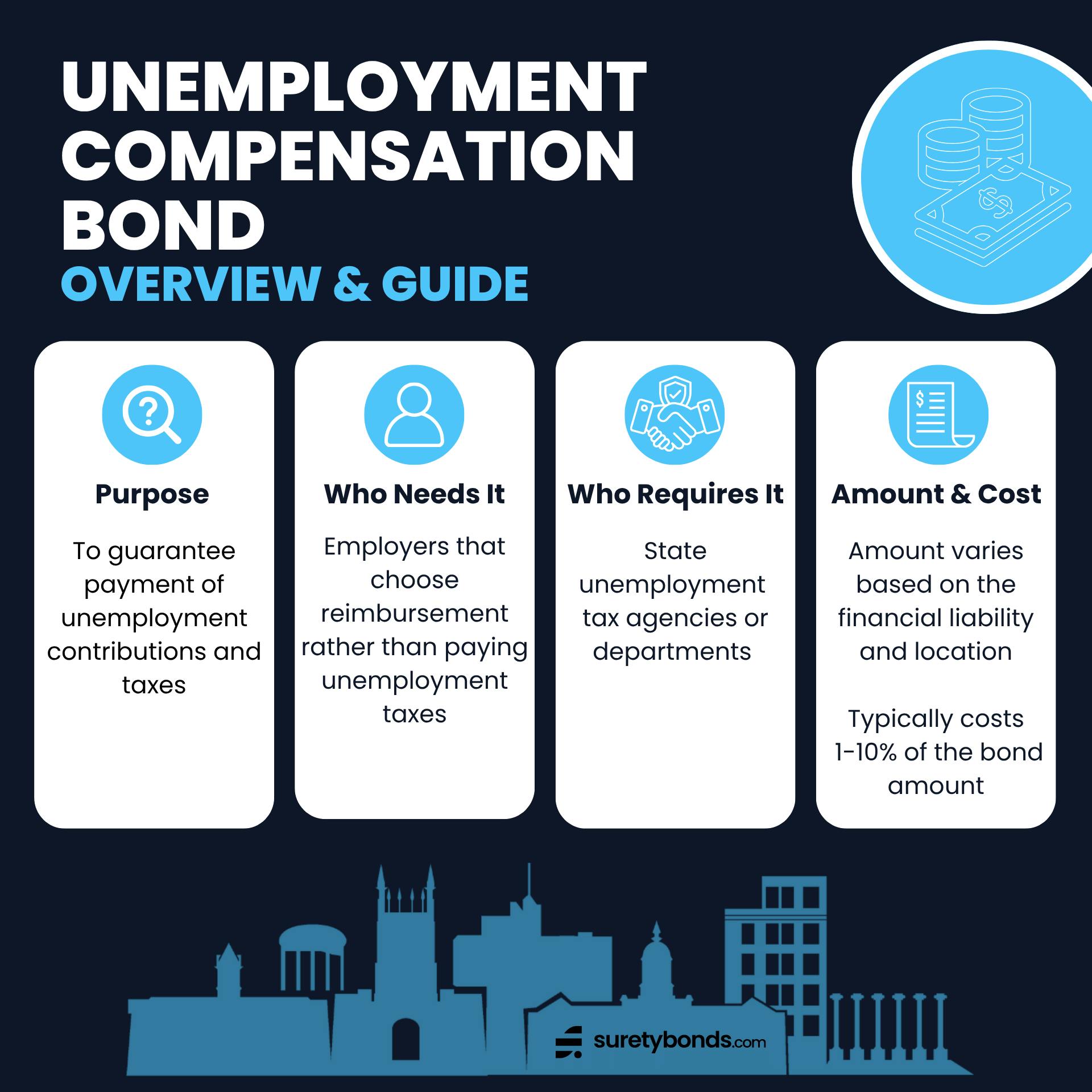
- Purpose: To guarantee payment of unemployment contributions and taxes
- Who Needs It: Employers that choose reimbursement rather than paying unemployment taxes
- Who Requires It: State unemployment tax agencies or departments
- Required Amount: $1,000–$100,000
- Premium Rates: 1–10% of the bond amount, credit-based
Learn all about the bond requirements and process in this guide.
What Are Unemployment Compensation Bonds?
Several states require employers that pay into an unemployment reserve fund rather than paying unemployment taxes to file a surety bond as financial security.
The exact bond names on the state-specific forms vary, including the following:
- Unemployment bond
- Unemployment compensation bond
- Unemployment insurance bond
- Unemployment reserve fund bond
Keep scrolling to find specific information for the unemployment bond requirement in your state.
How Much Do Unemployment Compensation Bonds Cost?
Unemployment compensation bonds cost a small percentage of the required coverage amount, typically 1–10%.
Surety underwriters will look at the credit score of anyone with 10% or more ownership stake in the company to determine your business’ personalized rate.
With excellent credit scores, you can expect to pay 1–3% of the total bond amount. For example, a qualified company might pay just $100–$300 for a $10,000 unemployment bond.
Visit our Surety Bond Cost FAQs page to learn more and use our free bond premium calculator.
How Do I Get an Unemployment Compensation Bond ?
You can get your unemployment compensation bond quote in under 24 hours with a licensed agency like SuretyBonds.com. Just follow these three steps:
- Step 1: Apply for a free, online quote.
- Step 2: Sign documents and pay the bond premium.
- Step 2: Receive your bond via mail or email.
- Step 3: File your bond with the appropriate state department
Select your state below to apply in minutes.
How Do Unemployment Compensation Bonds Work?
An unemployment reserve fund bond secures the payment of unemployment claims for employers who opt out of paying state unemployment taxes and choose to reimburse the state for benefits paid to their former employees.
The bond form is a legally-binding contract between three parties:
- Principal: You, the reimbursing employer filing the bond
- Obligee: The state unemployment agency or department requiring the bond
- Surety: The provider issuing the bond
As the principal, you are financially responsible for upholding the contract terms. If you don’t reimburse employees, the surety will pay claimants first, but you must repay the surety.
Who Needs an Unemployment Compensation Bond?
We currently issue unemployment insurance surety bonds for requirements in the following states:
- Pennsylvania Unemployment Compensation Bond
- Michigan Unemployment Bond
- Wisconsin Unemployment Reserve Fund Bond
- Maryland Unemployment Insurance Bond
- Washington Unemployment Compensation Bond
If you need a bond not listed here, please call 1 (800) 308-4358 for more information.
How Do I Renew My Unemployment Compensation Bond?
Unemployment reserve fund bonds typically have a one-year term. When you work with SuretyBonds.com, we’ll start contacting you 90 days in advance to make sure you renew your bond on time. This is important to avoid a lapse in coverage and any legal issues.
To renew, simply pay your renewal invoice online or over the phone before the expiration date. We’ll let you know if you need to send any additional documents to the obligee as proof of coverage.
How Do I Update My Unemployment Compensation Bond Form?
If the government entity requiring the bond (the obligee), requires your documentation to be updated for any reason, contact your surety company.
If you purchased your bond from us, email [email protected] to explain the needed change. The most common changes for unemployment bonds include updating the name(s), address or coverage amount.
Can I Get Bonded With Bad Credit?
Yes, don’t let your financial situation keep you from getting the bond you need. Our Bad Credit Bonding Program gives 99% of applicants access to the bond they need.
While those with very low credit may not qualify, we work with a variety of surety markets to find unemployment bond coverage at the best rates possible.