Florida Process Server Bond Guide
If you’re getting a new Florida process server certification, you may need a surety bond for the county in which you work. Learn all about the bonding process in this guide.
Bond Overview
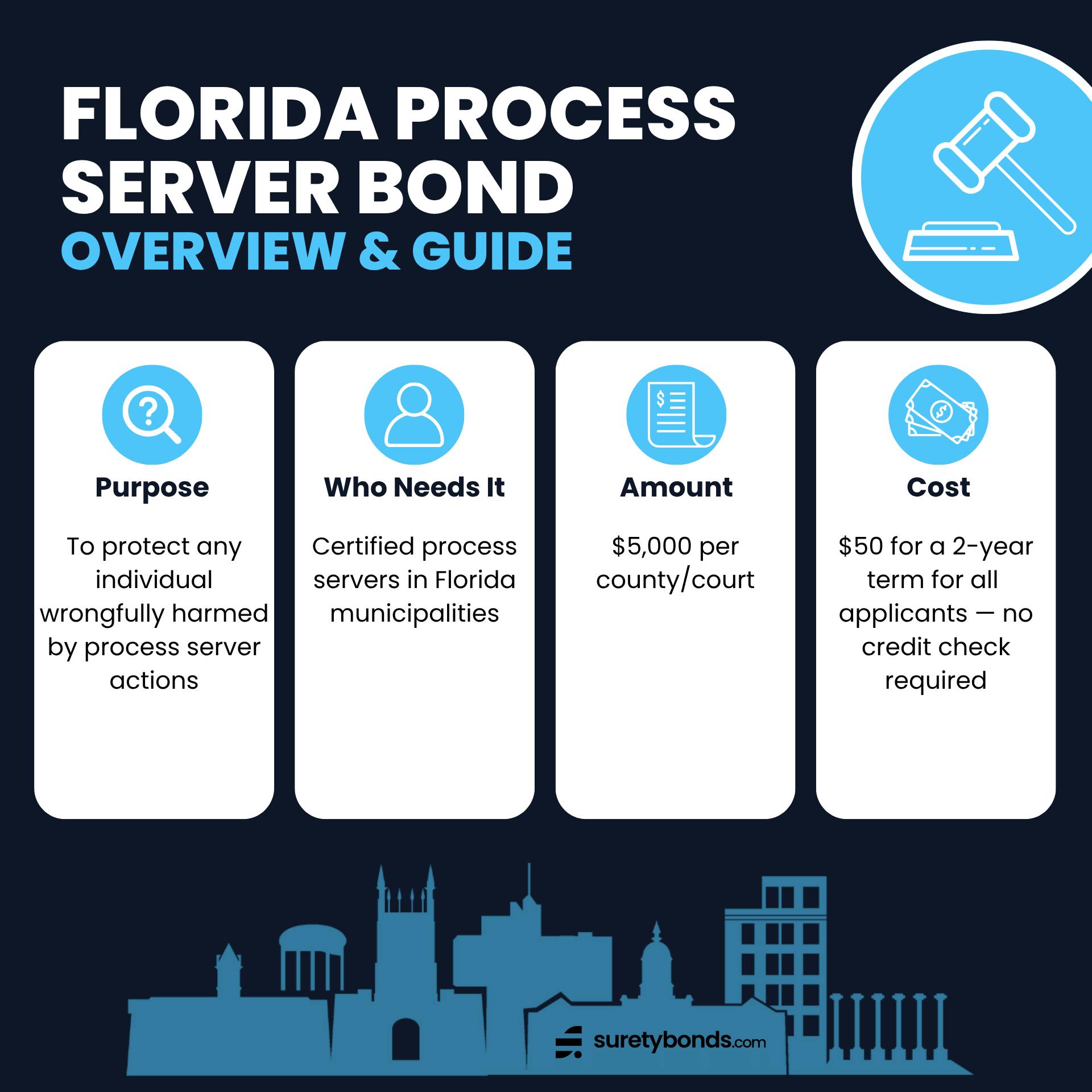
- Purpose: To protect any individual wrongfully harmed by process server actions
- Who Needs It: Certified process servers in Florida municipalities
- Regulating Body: Individual Florida counties and judicial courts
- Bond Amount: $5,000 per county/court
- Price: $50 for a 1-year term
Who Needs a Florida Process Server Surety Bond?
Process server bonds protect individuals if a Florida process server causes damages to a plaintiff by improperly handling, delivering or filing court documents.
The majority of the Florida judicial circuits require process servers to file a $5,000 surety bond. However, check with your local county clerk or circuit court to confirm if you need to be bonded.
Bond Coverage Requirements for Florida Process Servers
If you’re working in a single jurisdiction, you’ll need one $5,000 process server bond. However, if you work in multiple counties, you’ll need a separate surety bond for each county/judicial court.
You cannot get a $10,000 bond for two counties, rather, you would need two $5,000 bonds.
How Much Do Process Server Bonds Cost in Florida?
Florida surety bonds for process servers cost a flat rate of $50 for a 1-year term. Or, you can save 25% by selecting a multi-year term.
SuretyBonds.com offers the lowest available rates from our nationwide provider network with no added fees.
How Does a Florida Process Server Bond Work?
As a licensed process server in Florida, you’ll be delivering legal notices and court documents to parties and legal representatives.
To ensure you perform your duties correctly, the surety bond creates a financial guarantee between three parties.
| 3 Parties in the Bond | Description |
|---|---|
| Principal | The process server (you) |
| Obligee | The judicial circuit court/county requiring the bond |
| Surety | The issuing surety provider |
If you break any rules or regulations as a process server, the surety will pay valid claims to harmed individuals up to $5,000. Then, you must repay the surety company.
How Do I Get a Process Server Bond in Florida?
You can purchase your Florida process server bond online 24/7. Simply select your preferred term and provide the following information for your county's bond filing approval:
- Process server name
- County/judicial circuit court
- Date you were appointed/elected
Submit your payment information, then you’ll receive an email with the official bond form in minutes.
How Fast Can I Get My Bond?
SuretyBonds.com offers instant Florida process server bond delivery 24/7. Purchase now to receive your certified process server bond via email in minutes.
How Do I File My Bond?
Each Florida county enforces its own process server requirements, but most use the same standardized bond form.
However, there is a unique process server bond form for these three Florida counties:
- Monroe County
- Palm Beach County
- Seminole County
After you purchase your bond, you’ll receive directions on how to file it with the appropriate county clerk or circuit court.
Can I Get Bonded With Bad Credit?
Yes, your personal credit score does not impact your ability to get a Florida process server bond. They are issued without underwriting, meaning there is no credit check.
How Do I Renew My Bond?
If you maintain your process server certification for multiple years, you’ll need to renew your bond annually. Follow these steps:
- Pay the bond renewal fee when prompted by the surety.
- Receive your continuation certificate from the surety.
- File the continuation certificate with your county court.
Note: Most bonds expire one year after the purchase date. However, Seminole County, Florida process server bonds expire on December 31st annually.
How to Become a Process Server in Florida
Professional process servers do not need to be licensed with the state of Florida. However, you do need to be legally elected or appointed with any individual county or judicial court that enforces certification requirements for professional process servers.
According to Florida Statute 48.021(2), you must meet the following requirements to become a certified process server:
- Be at least 18 years old
- Be a permanent Florida resident
- Have no mental or legal disability
- Complete a background check
- File a certificate of good conduct
- Pass a state process server exam.
- Take your official oath.
Your individual county sheriff may enforce additional eligibility requirements, such as the requirement to purchase and file a surety bond. Find the step-by-step process on how to become a certified process server in Florida in our guide here.